in Vienna. At the time of this dedication, the count had lost his fortune and that of his wife, trying to persuade Austria to declare war against Napoleon. He died in 1823, disgraced and penniless. The original second movement of the work was the Andante favori (WoO 57) , removed for being too long . This information was reported by the composer's friend Ferdinand Ries, he himself may have made the suggestion. ConsideracionesConsiderations EstructuraStructure En términos conceptuales, muchos consideran que esta sonata tiene tres movimientos, pues aunque la segunda sección está etiquetada introducción y se une al rondó, está en una tonalidad diferente a los dos movimientos exteriores, fa mayor con un patrón ABA propio. In conceptual terms, this sonata is considered by many to have three movements, for although the second section is labeled introduction and joins the rondo, it is in a different key than the outer two movements, F major with a pattern own ABA. Los primeros movimientos de esta sonata y de la No. 23 tienen codas dramáticas y extendidas, rivalizando con las secciones de desarrollo. The first movements of this sonata and of No. 23 have dramatic and extended codas, rivaling the development sections. Indicaciones en la interpretaciónIndications in interpretation Las marcas de los pedales a lo largo del movimiento final son inusualmente largas y mezclando armonías tónicas y dominantes. Los ejecutantes tienen el desafío en los pianos de hoy de crear una sonoridad que emule lo que el compositor pudo haber tenido en mente. The pedal marks throughout the final movement are unusually long and mixing tonic and dominant harmonies. Players are challenged on pianos today to create a sonority that emulates what the composer may have had in mind. Posibles relaciones entre los movimientosPossible relationships between the movements El tema de apertura del primer movimiento se mueve desde la nota mi hacia arriba al sol ; el tema de apertura del Rondo comienza en sol y regresa a mi . The opening theme of the first movement moves from the note mi up to the g ; the Rondo's opening theme starts at g and returns to mi . Los compases 22 y 23 del movimiento de apertura presentan una armonía de sexta aumentada construida sobre fa que se resuelve en la dominante de mi mayor/menor, una progresión distintiva. El segundo movimiento se abre con la misma progresión transpuesta y en un registro más bajo, pero también como aparece en los compases 185 y 186 del primer movimiento. Bars 22 and 23 of the opening movement feature an augmented sixth harmony built on F that resolves to the dominant of E major/minor, a distinctive progression. The second movement opens with the same transposed progression and in a lower register, but also as it appears in bars 185 and 186 of the first movement. Primer Movimiento: Do mayor | Allegro molto e con brio | C 4/4 | Forma Sonata, coda largamente desarrollada First Movement: C major | Allegro molto e con brio | C 4/4 | Sonata form, long developed coda ExposiciónExposition Compases 1 a 20Measures 1 to 20 La sonata se abre con una demostración de virtuosidad. La frase de apertura en Do mayor termina en el dominante; se repite un tono entero más abajo, B♭, moviéndose el motivo final al paralelo menor de su dominante, fa menor. Esta sonoridad también funciona como subdominante en do menor. La tercera frase se mueve a la dominante de do menor, presentando un pasaje basado en su dominante noveno. La resolución a la tónica de do menor termina con un fermata en la quinta de la escala. Entonces un retorno al paralelo mayor, Do, marca el comienzo de una repetición del tema de apertura. Esta vez, sin embargo, se mueve un tono completo arriba, usando el modo menor, el supertónico del tono de inicio. The sonata opens with a display of virtuosity. The opening phrase in C major ends in the dominant; it is repeated a whole tone below, B♭, moving the final motif to the minor parallel of its dominant, F minor. This sonority also functions as a subdominant in C minor. The third phrase moves to the dominant of C minor, presenting a passage based on its dominant ninth. The resolution to the tonic of C minor ends with a fermata in the fifth of the scale. Then a return to the major parallel, C, marks the beginning of a repeat of the opening theme. This time, however, it moves up a whole tone, using the minor mode, the supertonic of the opening tone. Compases 22 a 34Measures 22 to 34 Una sorprendente sexta aumentada conduce a un pasaje en que Si mayor, como dominante, y mi menor, como tónica, terminando con tonalidad prolongada en Si mayor. A surprising augmented sixth leads to a passage in which B major, as the dominant, and E minor, as the tonic, ending with a prolonged key in B major. Compases 35 a 74Measures 35 to 74 Toda la segunda área temática se basa en Mi mayor, primero presentando un segundo tema similar a un coral, y luego basado en arpegios, un pasaje que conduce a una cadencia culminante en Mi. Un ejemplo anterior de relación tónico-mediante en la tonalidad de Do es la relación entre los tonos de la primera y la segundo movimientos de la sonata no. 3 . The entire second theme area is based on E major, first introducing a chorale-like second theme, and then based on arpeggios, a passage that leads to a climactic cadence in E. An earlier example of a tonic-median relationship in the key of C is the relationship between the tones of the first and second movements of the sonata no. 3 . Compases 74 a 85Measures 74 to 85 Una sección cadencia de cierre en la menor, mi menor y, cuando se toma la repetición, do mayor. El segundo final conduce a un sección de desarrollo que se abre en fa mayor. A closing cadence section in A minor, E minor, and, when the repeat is taken, C major. The second ending leads to a development section that opens in F major. DesarrolloDevelopment El desarrollo presenta el tema de apertura de la exposición y el pasaje basado en arpegios del segundo tema, en ese orden. Presenta los temas de exposición en el orden de su primera aparición es un recurso utilizado también en el desarrollos de las sonatas no. 1 , no. 10 , no. 19 , no. 20 , no. 14, tercer movimiento y la no. 23 . The development features the exposition's opening theme and the arpeggio-based passage of the second theme, in that order. It presents the exposition themes in the order of their first appearance is a resource also used in the development of the sonatas no. 1 , no. 10 , no. 19 , no. 20 , no. 14, third movement and the no. 23 . Compases 90 a 112Bars 90 to 112 La frase de apertura del primer tema se enuncia en su totalidad en fa mayor, pero luego su figura final se separa y se desarrolla por separado, tocando en las tonalidades de sol menor, do menor y fa menor, Do♭ mayor, La♭ mayor y Fa menor, formando una cadencia final que llega a Do mayor. The opening phrase of the first theme is stated entirely in F major, but then its final figure breaks off and is developed separately, playing in the keys of G minor, C minor and F minor, C♭ major, A♭ major and F minor, forming a final cadence that reaches C major. Compases 112 a 142Measures 112 to 142 El pasaje basado en arpegios del segundo el tema se extiende, luego se fragmenta, se mueve hasta Do mayor, Fa mayor, Si♭ mayor, mi♭ menor, si menor, y do menor, llegando finalmente a descansar sobre la séptima dominante de Do. The arpeggio-based passage of the second theme extends, then fragments, moving to C major, F major, B♭ major, E♭ minor, B minor, and C minor, finally coming to rest on the dominant seventh of C. . Compases 142 a 156Measures 142 to 156 La transición a la recapitulación es una de las más emocionantes de todas las sonatas, sólo rivaliza por el de la sonata no. 23 . Un ostinato bajo construido sobre la dominante está unido por figuración ascendente en la mano derecha basado por último en algunas notas del tema principal. Después de esta combinación alcanza su punto máximo, con figuración marcada con sforzandi y una escala en movimiento contrario introductorio a la recapitulación. The transition to the recapitulation is one of the most exciting of all the sonatas, rivaled only by that of the sonata no. 23 . A low ostinato built on the dominant is joined by rising figuration in the right hand ultimately based on some notes from the main theme. After this combination it reaches its peak, with figuration marked with sforzandi and a scale in contrary movement introductory to the recapitulation. RecapitulaciónRecapitulation Compases 168 a 173Measures 168 to 173 Se abre un retorno deliciosamente provocador al terminar una frase de la exposición sobre el nota “incorrecta”, la♭ en lugar de sol. Asumiendo el nota incorrecta para representar la dominante de un nuevo tono, la frase se repite en Re♭ mayor, pero termina ahora en Si♭. Como para acomodar la nota "erronea" por segunda vez, la frase que repite está en Mi♭ mayor pero modula hábilmente de regreso al tono de inicio, Do mayor. A delightfully provocative return opens at the end of a phrase in the exposition on the “wrong” note, A♭ instead of G. Assuming the wrong note to represent the dominant of a new pitch, the phrase repeats in D♭ major, but now ends in B♭. As if to accommodate the "wrong" note a second time, the phrase he repeats is in E♭ major but cleverly modulates back to the starting key, C major. Compases 184 a 210Measures 184 to 210 La transición al segundo tema establece el tono de La mayor. El segundo tema se enuncia en ese tono, pero en una reafirmación se abre en el paralelo menor, la menor y resuelve en Do mayor por el resto de la segunda área temática de la recapitulación. The transition to the second theme sets the key of A major. The second theme is stated in that key, but in a restatement it opens in parallel minor, A minor, and resolves in C major for the rest of the second theme area of the recapitulation. Compases 245 a 248Measures 245 to 248 La cadencia de la sección de cierre en Do mayor se mueve a Fa mayor, luego a la paralela menor, esta cerrando frase inesperadamente con una cadencia engañosa que pasa a Re♭ mayor. The cadence of the closing section in C major moves to F major, then parallel minor, unexpectedly closing the phrase with a tricky cadence that moves to D♭ major. CodaCoda Compases 249 a 259Measures 249 to 259 La coda es de largo desarrollo, rivaliza en emoción sólo por la coda del primer movimiento de la sonata no. 23 . Se abre el primer tema en Re♭ y se fragmenta a medida que avanza si♭ menor y do menor. The coda is a long development, rivaled in emotion only by the coda of the first movement of sonata no. 23 . The first theme opens in D♭ and breaks up as it progresses in B♭ minor and C minor. Compases 261 a 302Measures 261 to 302 Luego, el tema de apertura se establece en do mayor, pero se fragmenta a medida que avanza hacia un clímax que abarca todo el teclado y termina en la dominante. El segundo tema se plantea de nuevo, cierre con medias cadencias prolongadas en el tono de inicio. Finalmente, las notas repetidas que abren el primer tema conducen a una fuerte escala descendente y la cadencia final. The opening theme is then set to C major, but fragments as it builds to a keyboard-spanning climax ending in the dominant. The second theme is raised again, closing with prolonged half cadences on the opening tone. Finally, the repeated notes that open the first theme lead to a strong descending scale and the final cadence. Segundo Movimiento: Fa mayor | Adagio molto | 6/8 | A|B|A, atacca subito el siguiente movimiento Second Movement: F major | Adagio molto | 6/8 | A|B|A, atacca subito the next movement EstructuraStructure Las secciones A exteriores son motívicas e improvisadas, la sección B presenta una melodía de siete compases en fa mayor. El estado de ánimo es de contemplación serena. The outer A sections are motivic and improvised, the B section features a seven-bar melody in F major. The mood is one of serene contemplation. Compases 1 a 9Measures 1 to 9 Un motivo de ritmo punteado ascendente parece abrirse en Fa mayor pero se resuelve en Mi mayor bajando al séptimo grado de la escala y tratando la armonía como de una sexta aumentada. La idea se repite, ahora abriéndose en la paralela menor, mi menor, pero resolviéndose como una dominante invertida a Si mayor. Una tercera entrada cambia la fundamental hacia abajo medio tono, crea una sexta aumentada, y se resuelve en la dominante del tono de inicio, Do7. Luego, una cadencia se detiene en Fa mayor. Como en el apertura del primer movimiento, Beethoven presenta una exhibición virtuosa de progresiones armónicas. An ascending dotted rhythm motif appears to open in F major but is resolved in E major by moving down to the seventh degree of the scale and treating the harmony as an augmented sixth. The idea is repeated, now opening in the parallel minor, E minor, but resolving as a dominant inverted to B major. A third entry shifts the root down a half step, creates an augmented sixth, and resolves to the dominant of the starting tone, C7. Then a cadence stops in F major. As in the opening of the first movement, Beethoven presents a virtuoso display of harmonic progressions. Compases 10 a 16Measures 10 to 16 Un tema melódico en Fa mayor alarga la figura inicial del movimiento en la primera frase, de dos compases más, termina en la dominante, y la segunda de dos compases, la frase vuelve a la tónica. Una tercera afirmación lleva a la vuelta de la sección A. A melodic theme in F major lengthens the opening figure of the movement in the first phrase, by two more bars, ending in the dominant, and by the second by two bars, the phrase returns to the tonic. A third statement leads back to section A. Compases 17 a 28Measures 17 to 28 Se repiten las dos primeras afirmaciones de la sección A anterior. La tercera declaración se extiende, el motivo de apertura sube a la séptima dominante del tono de inicio de la sonata, Do mayor, luego descendiendo a una media cadencia final que conduce, tras una fermata llena de suspenso, al compás de el movimiento final sin interrupción. The first two statements of section A above are repeated. The third statement is extended, the opening motif rising to the dominant seventh of the sonata's opening key, C major, then descending to a final half cadence that leads, after a suspenseful fermata, to the beat of the final movement without interruption. Tercer Movimiento | Do mayor | Allegro moderato | 2/4 | Rondó | A|B|A|C desarrollo y coda Third Movement | C major | Allegro moderato | 2/4 | Rondo | A|B|A|C development and coda Compases 1 a 62Measures 1 to 62 El tema de apertura lírico se presenta tres veces. La primer entrada se desarrolla en una presentación cruzada de manos en los compases 1 a 23, la segunda con octavas de la mano derecha acompañadas por arpegios de la mano izquierda en los compases 31 a 50, y la tercera con la mano derecha ejecutando un trino prolongado mientras la voz superior describe la melodía, acompañada por la mano izquierda con escalas en semicorcheas y garrapateas, la combinación creando un emocionante momento culminante. Las dos primeras afirmaciones van acompañadas de largas indicaciones de pedal que mezclan armonías tónicas y dominantes. Los intérpretes al ejecutarlas en los pianos de hoy en día a veces hacen ajustes, y muchas ediciones cambian las indicaciones u ofrecen alternativas. The lyrical opening theme is presented three times. The first entry takes place in a cross-hand presentation in bars 1-23, the second with right-hand octaves accompanied by left-hand arpeggios in bars 31-50, and the third with the right hand trilling. prolonged as the upper voice describes the melody, accompanied by the left hand with sixteenth note scales and scrawls, the combination creating an exciting climax. The first two statements are accompanied by long pedal prompts that mix tonic and dominant harmonies. Players playing them on today's pianos sometimes make adjustments, and many editions change the indications or offer alternatives. Compases 63 a 113Measures 63 to 113 La primera sección se abre con un acorde roto figurado en Do mayor. Una segunda sección en la menor esboza un nuevo motivo que se abre en octavas staccato de manera ascendente en los compases 71 a 98. Un pasaje de transición presenta la frase de apertura del tema A , nuevamente con indicaciones de pedales que mezclan tonalidades en los compases 99 a 113. The first section opens with a broken chord figured in C major. A second section in A minor outlines a new motif that opens in ascending staccato octaves in bars 71 to 98. A transitional passage introduces the opening phrase of the A theme , again with pedal indications that mix keys in measures 99 to 113. Compases 114 a 175Measures 114 to 175 La sección A se repite en su totalidad. The section A is repeated in its entirety. Compases 176 a 220Measures 176 to 220 La sección C presenta primero un tema fuerte en octavas, apertura en do menor y dada alternativamente a cada mano. Su segunda declaración va acompañada de un vertiginoso y difícil Tresillo de semicorcheas en los compases 183 a 216. Su impulso es aliviado por una serie de octavas individuales en ambas manos en la nota Do, a un ritmo tal que la dificultad de llevar este pasaje a un alto nivel se vuelve dolorosamente evidente, compases 217 a 220. The C section first features a strong theme in octaves, opening in C minor and given alternately to each hand. Its second statement is accompanied by a dizzying and difficult triplet of sixteenth notes in bars 183 to 216. Its momentum is relieved by a series of single octaves in both hands on the note C, at such a pace that the difficulty of bringing this passage to a high level becomes painfully evident, bars 217 to 220. Compases 221 a 312Measures 221 to 312 Sigue una sección de desarrollo, que comienza con la entrada de la frase de apertura del tema A en La♭ mayor, Fa menor, y Re♭ mayor en los compases 221 a 234. Después de una sección de transición que consta de acordes sincopados, las dos notas da capo del tema. Se plantea un tema con arpegios y pasajes, moviéndose a través de Do mayor, Fa mayor, Si♭ mayor, Mi♭ menor, Re♭ mayor y do menor, finalmente descansando en prolongadas armonías de séptima/novena dominante en la tonalidad principal de Do en los compases 235 a 312. A development section follows, beginning with the entry of the opening phrase of the A theme in A♭ major, F minor, and D♭ major in bars 221 to 234. After a section of transition consisting of syncopated chords, the two da capo notes of the theme. A theme is laid out with arpeggios and passages, moving through C major, F major, B♭ major, E♭ minor, D♭ major, and C minor, finally resting on long dominant seventh/ninth harmonies in the major key of C. in measures 235 to 312. Compases 313 a 344Measures 313 to 344 Las declaraciones segunda y tercera del tema principal de la sección A se repiten. The second and third statements of the main topic of section A are repeated. Compases 345 a 402Measures 345 to 402 La primera sección de la primer entrada se reinicia y expande ambas manos participando en el rápido acorde roto, figuraciones que se vuelven cada vez más frenéticas, a menudo puntuado con sforzandi. Una sección posterior termina con sólidos acordes de armonía dominante que se elevan para incorporar una novena menor. The first section of the first entry restarts and expands both hands participating in the rapid broken chord, figurations that become increasingly frantic, often punctuated with sforzandi. A later section ends with solid dominant harmony chords rising to incorporate a minor ninth. Compases 403 a 543Measures 403 to 543 Una coda extendida marcada como prestissimo se abre con declaraciones del tema A en Do mayor, Fa mayor en el compás 427, y Sol mayor en el compás 431, ampliando la frase con pasajes en cada caso. Luego un pasaje usando la apertura de dos notas del motivo del tema se mueven a través de La♭ mayor, fa menor, Re♭ mayor, si♭ menor, fa menor y La♭ mayor, llegando finalmente a descansar sobre una tónica de seis por cuatro perfilada con octavas rápidas en los compases 441 a 474. Estos se digitan 5-1, 5-1, 5-1 en las fuentes, y se cree que se requieren octavas glissandi, que eran más fáciles de ejecutar sobre la acción de los pianos de época. Los artistas intérpretes o ejecutantes de hoy en día a veces incorporan octave glissandi pero también a veces dividen las octavas entre las manos de varias maneras cuando la acción del piano es demasiado resistente. La sección final de la coda coloca trinos prolongados en la mano derecha con voz superior delineando el tema A en movimiento a través de Do mayor, do menor, La♭ mayor y fa menor, finalmente llegando a descansar en una media cadencia que incorpora triple trinos en los compases 477 a 514. Declaraciones finales de la frase apertura del tema A y el pasaje rápido traen el movimiento hasta un final brillante en los compases 515 a 545). Los trinos prolongados en esta coda fueron realizados por el compositor en un ejemplo al final del autógrafo. Dos versiones se han ofrecido: uno más duro con el trino en 1/128 y otra más fácil con el trino en 1/64. Ambos ejemplos inician el trino en apoyatura superior, hecho que ha causado mucha especulación, ya que se trata de un fecha relativamente tardía para que el compositor lo hiciera. An extended coda marked prestissimo opens with statements of the A theme in C major, F major at bar 427, and G major at bar 431, expanding the phrase with passages in each case. Then a passage using the two-note opening of the theme motif moves through A♭ major, F minor, D♭ major, B♭ minor, F minor, and A♭ major, finally coming to rest on a six-part tonic. four outlined with fast octaves in bars 441 to 474. These are fingered 5-1, 5-1, 5-1 in the sources, and are thought to require glissandi octaves, which were easier to play over the action of the vintage pianos. Today's performers sometimes incorporate octave glissandi but also sometimes split octaves between hands in various ways when the piano action is too resistant. The final section of the coda places extended trills in the uppervoiced right hand outlining the A theme moving through C major, C minor, A♭ major and F minor, finally coming to rest at a half cadence incorporating triple trills in bars 477 to 514. Closing statements from the theme A opening phrase and the fast passage bring the movement to a brilliant finish in bars 515 to 545). The extended trills in this coda were performed by the composer in an example at the end of the autograph. Two versions have been offered: a harder one with the trill at 1/128 and an easier one with the trill at 1/64. Both examples start the trill in upper appoggiatura, a fact that has caused much speculation, since it is a relatively late date for the composer to do so."> Beethoven Piano Sonata 21 "Waldstein" Library
Beethoven Piano Sonata 21 "Waldstein"

Opus 53


Download PDF
Beethoven Piano Sonata 21 Beethoven Piano Sonata 21 Beethoven Piano Sonata 21 Beethoven Piano Sonata 21 Beethoven Piano Sonata 21 Beethoven Piano Sonata 21 Beethoven Piano Sonata 21 Beethoven Piano Sonata 21 Beethoven Piano Sonata 21 Beethoven Piano Sonata 21 Beethoven Piano Sonata 21 Beethoven Piano Sonata 21 Beethoven Piano Sonata 21 Beethoven Piano Sonata 21 Beethoven Piano Sonata 21 Beethoven Piano Sonata 21 Beethoven Piano Sonata 21 Beethoven Piano Sonata 21 Beethoven Piano Sonata 21 Beethoven Piano Sonata 21 Beethoven Piano Sonata 21 Beethoven Piano Sonata 21 Beethoven Piano Sonata 21 Beethoven Piano Sonata 21 Beethoven Piano Sonata 21 Beethoven Piano Sonata 21 Beethoven Piano Sonata 21 Beethoven Piano Sonata 21 Beethoven Piano Sonata 21 Beethoven Piano Sonata 21 Beethoven Piano Sonata 21 Beethoven Piano Sonata 21 Beethoven Piano Sonata 21 Beethoven Piano Sonata 21 Beethoven Piano Sonata 21 Beethoven Piano Sonata 21 Beethoven Piano Sonata 21 Beethoven Piano Sonata 21 Beethoven Piano Sonata 21 Beethoven Piano Sonata 21


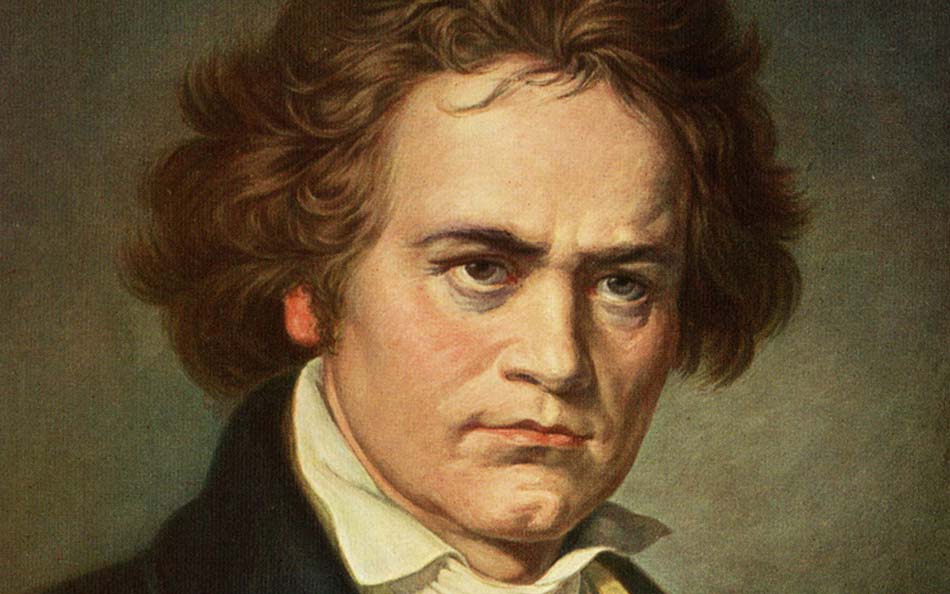
Beethoven painting
Beethoven Piano Sonata 21

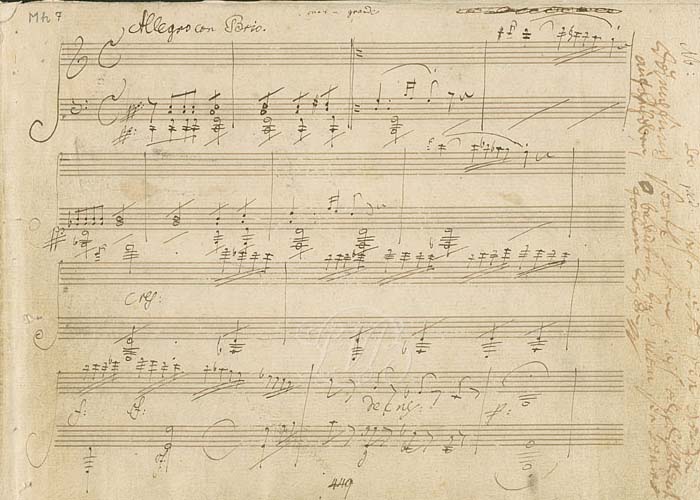
Beethoven Piano Sonata 21 "Waldstein" –Manuscript

1804.

Download

Music Courses

"The genie is made up of 2% talent and 98% constant perseverance." –L. V. Beethoven.

Info and Registration

Beethoven Piano Sonata 21 "Waldstein" –Interesting Facts

And now we’ve reached the incandescent marvel that is the Waldstein. It’s one of Beethoven’s most expansive and uplifting works, but its instant likability sometimes obscures that fact that it’s a deeply restless and innovative work, structurally and texturally extraordinary in ways that sound natural only because the sonata is so well-put together.


Beethoven Piano Sonata 21 "Waldstein" –Novelties

Take the opening of the first move. What kind of sound is this? It's tense without being dramatic, ambiguous without being vague, moving and shapeless, and auditory without any sense of harmony, even though it's just a C major chord in the root position, of all things. There is also the tonal uneasiness of this work: right after the C major chord we get a secondary dominant, followed almost immediately by an unprepared shift towards B flat major, this is one of those moments that is they reproduce as a funny gesture or as something more mysterious. The second group of themes (which has a striking link to the first theme in the form of a 5-note descending motif) is in E major, rather than the more normal G Major | F major | The minor. And the recap is surprisingly fun; there are little scripts of new material and the second thematic group goes into the more frivolous A major, another "wrong" tone. There's more, like this little infinitely flexible modulation idea, but that will be highlighted below.

The second movement, an expanded introduction to the rondo, is one of Beethoven's slow and harmonically deceptive pit movements, and the rondo itself is a flash of wonder. There's theme A, floating in a haze of fuzzy harmonies; a B theme that he builds for the second time in a huge orchestral spiel; a transitional motif, based on theme A, joyful, sad and noble at the same time; and an extended coda that is as evolutionary as it is brilliant. The mere fact that the latest movement carries so much weight was quite novel for the time. Beethoven gradually shifted the heavy lifting from first to last movement in his 32 sonatas.


Biography of the Sonata

Between May and November 1803 Beethoven spent most of his time in resorts outside of Vienna working on Symphony No. 3, the Leonore Overture no. 2, and op. 53. This was also the year the composer received a new piano from Sébastian Érard in Paris. It had a range of five and a half octaves, from F to C. Unfortunately, Beethoven was not very fond of the piano, but the extra notes he provided may be why this score incorporates four notes above the typical Viennese piano time signature, F♯, G, G♯, and A.


Factual information

This sonata was published by the Bureau des arts et l'industrie in May 1805. The existing autograph of the work is not believed to be the source of the first edition due to the number of differences between the two . The sonata derives its nickname from the dedication to Count Ferdinand Ernest Gabriel von Waldstein (1762-1823), a friend and patron of the time when Beethoven resided in Bonn. Sent to Bonn on a diplomatic mission, the Count is believed to have influenced Bonn's electorate, Maximillian Franz (1756-1801), to sponsor Beethoven studies with Haydn > in Vienna. At the time of this dedication, the count had lost his fortune and that of his wife, trying to persuade Austria to declare war against Napoleon. He died in 1823, disgraced and penniless. The original second movement of the work was the Andante favori (WoO 57), removed for being too long. This information was reported by the composer's friend Ferdinand Ries, he himself may have made the suggestion.


Considerations

Structure

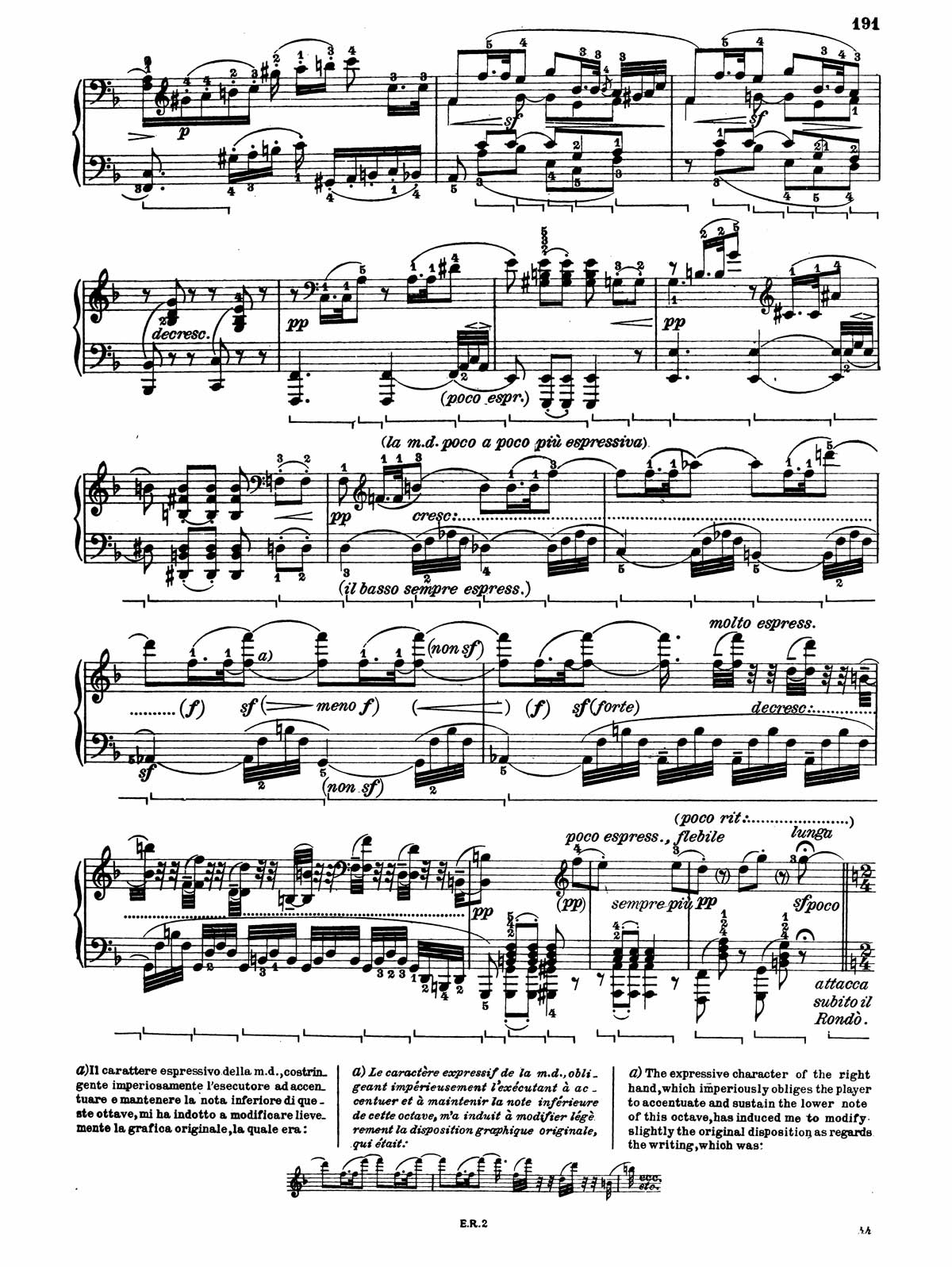
In conceptual terms, this sonata is considered by many to have three movements, for although the second section is labeled introduction and joins the rondo, it is in a different key than the outer two movements, F major with a pattern own ABA.

The first movements of this sonata and of No. 23 have dramatic and extended codas, rivaling the development sections.

Indications in interpretation

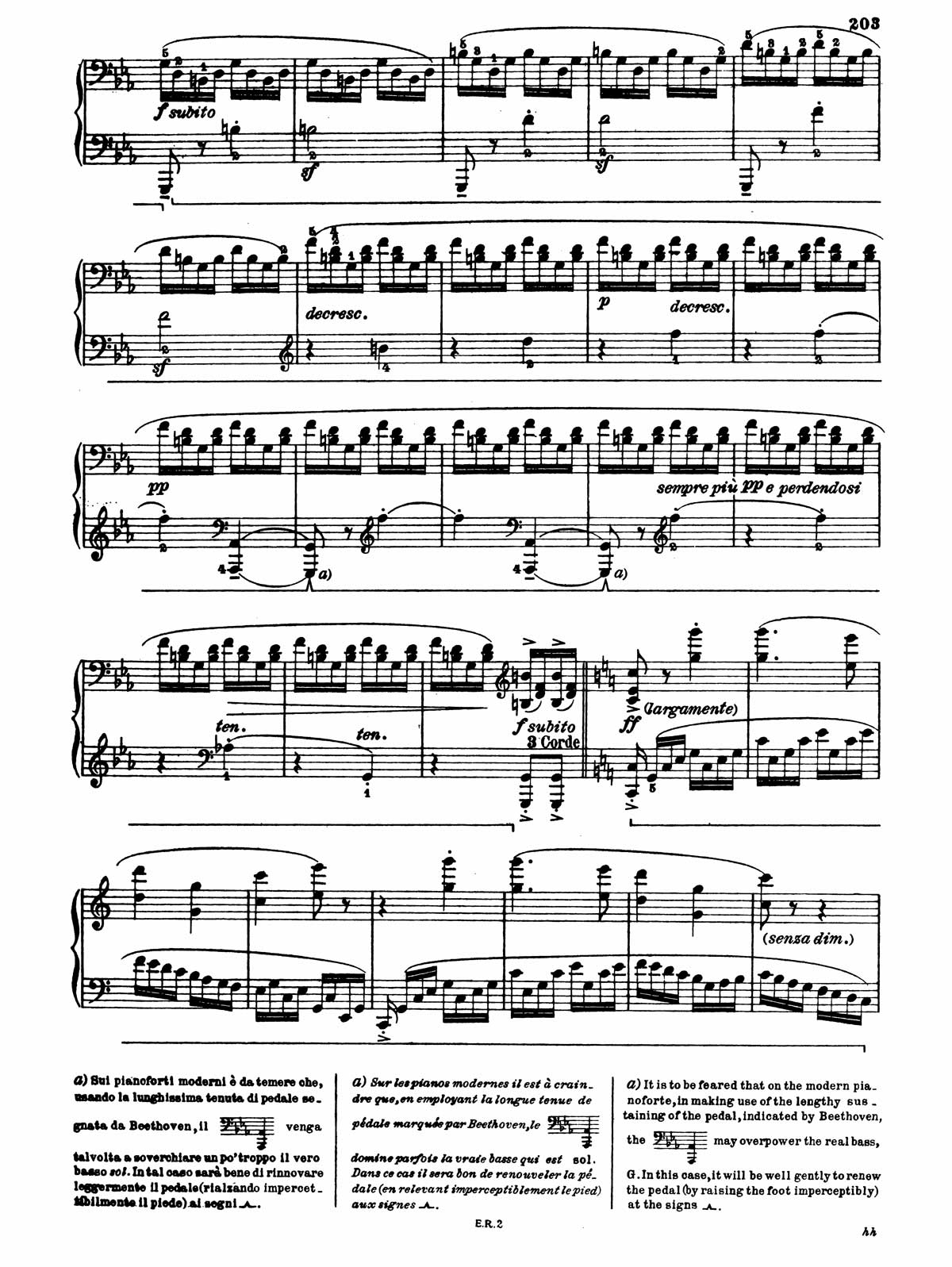
The pedal marks throughout the final movement are unusually long and mixing tonic and dominant harmonies. Players are challenged on pianos today to create a sonority that emulates what the composer may have had in mind.

Possible relationships between the movements

The opening theme of the first movement moves from the note mi up to the g; the Rondo's opening theme starts at g and returns to mi.

Bars 22 and 23 of the opening movement feature an augmented sixth harmony built on F that resolves to the dominant of E major/minor, a distinctive progression. The second movement opens with the same transposed progression and in a lower register, but also as it appears in bars 185 and 186 of the first movement.


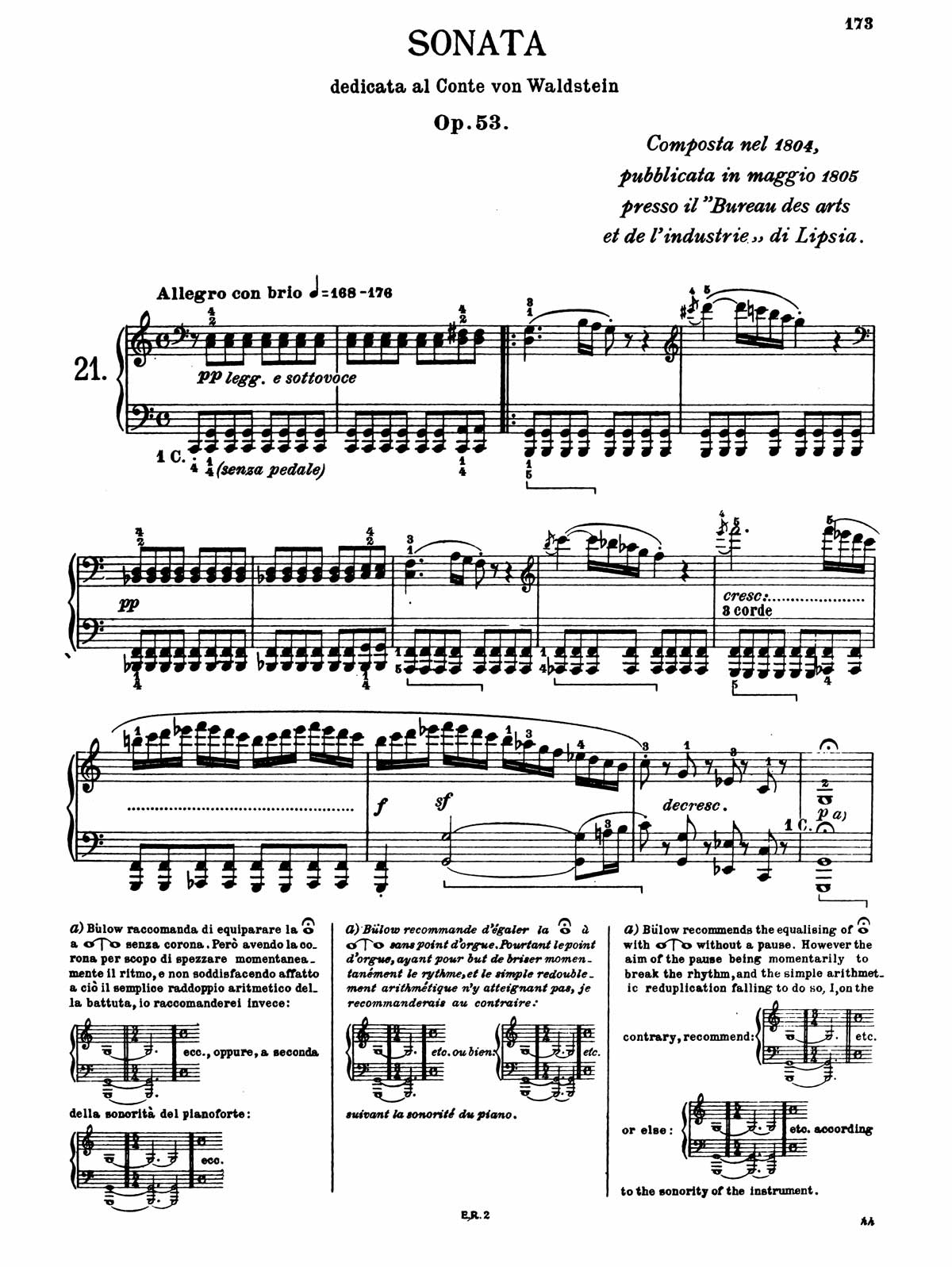
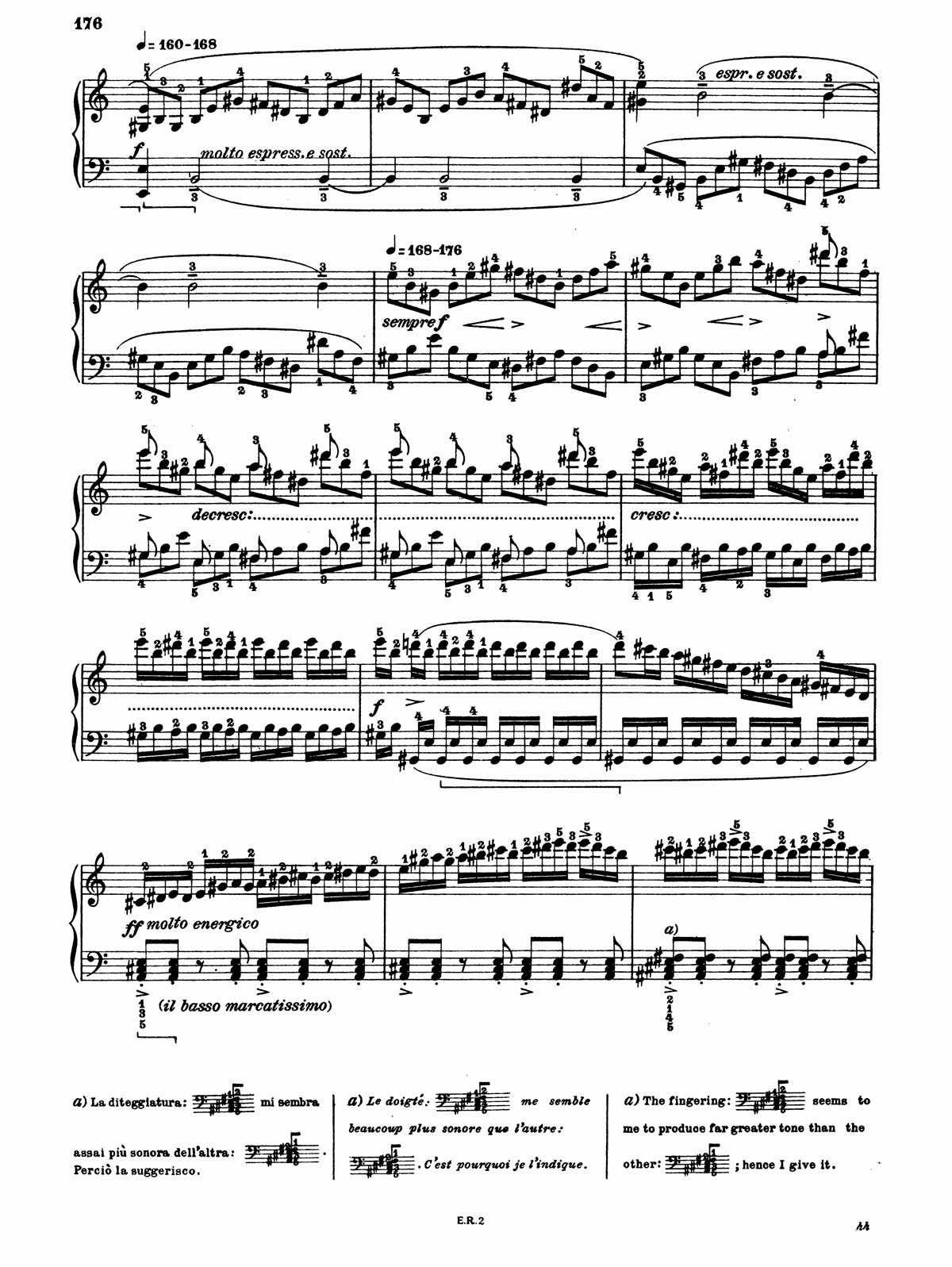
First Movement: C major | Allegro molto e con brio | C 4/4 | Sonata form, long developed coda

Exposition
Measures 1 to 20

The sonata opens with a display of virtuosity. The opening phrase in C major ends in the dominant; it is repeated a whole tone below, B♭, moving the final motif to the minor parallel of its dominant, F minor. This sonority also functions as a subdominant in C minor. The third phrase moves to the dominant of C minor, presenting a passage based on its dominant ninth. The resolution to the tonic of C minor ends with a fermata in the fifth of the scale. Then a return to the major parallel, C, marks the beginning of a repeat of the opening theme. This time, however, it moves up a whole tone, using the minor mode, the supertonic of the opening tone.

Measures 22 to 34

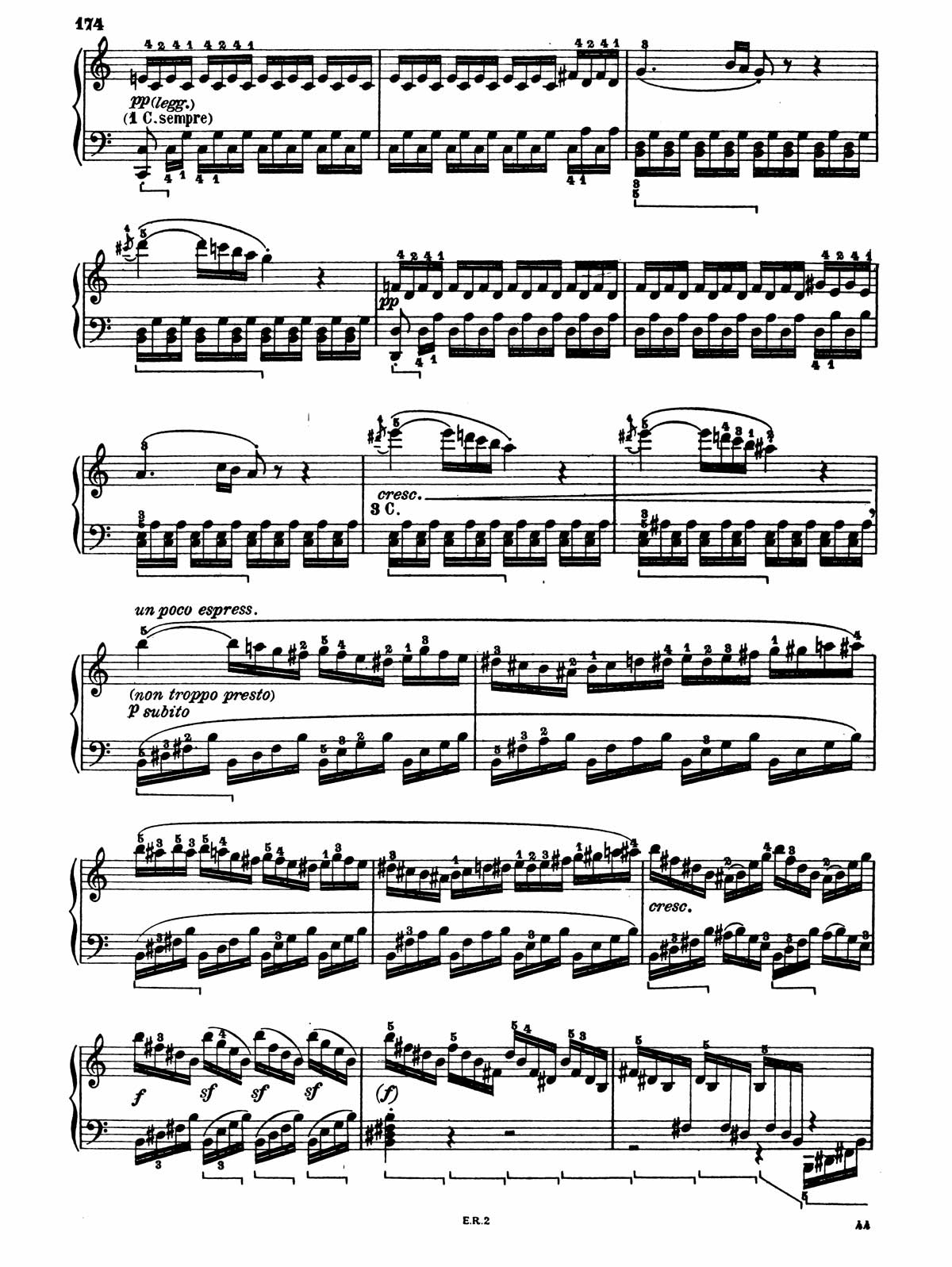
A surprising augmented sixth leads to a passage in which B major, as the dominant, and E minor, as the tonic, ending with a prolonged key in B major.

Measures 35 to 74

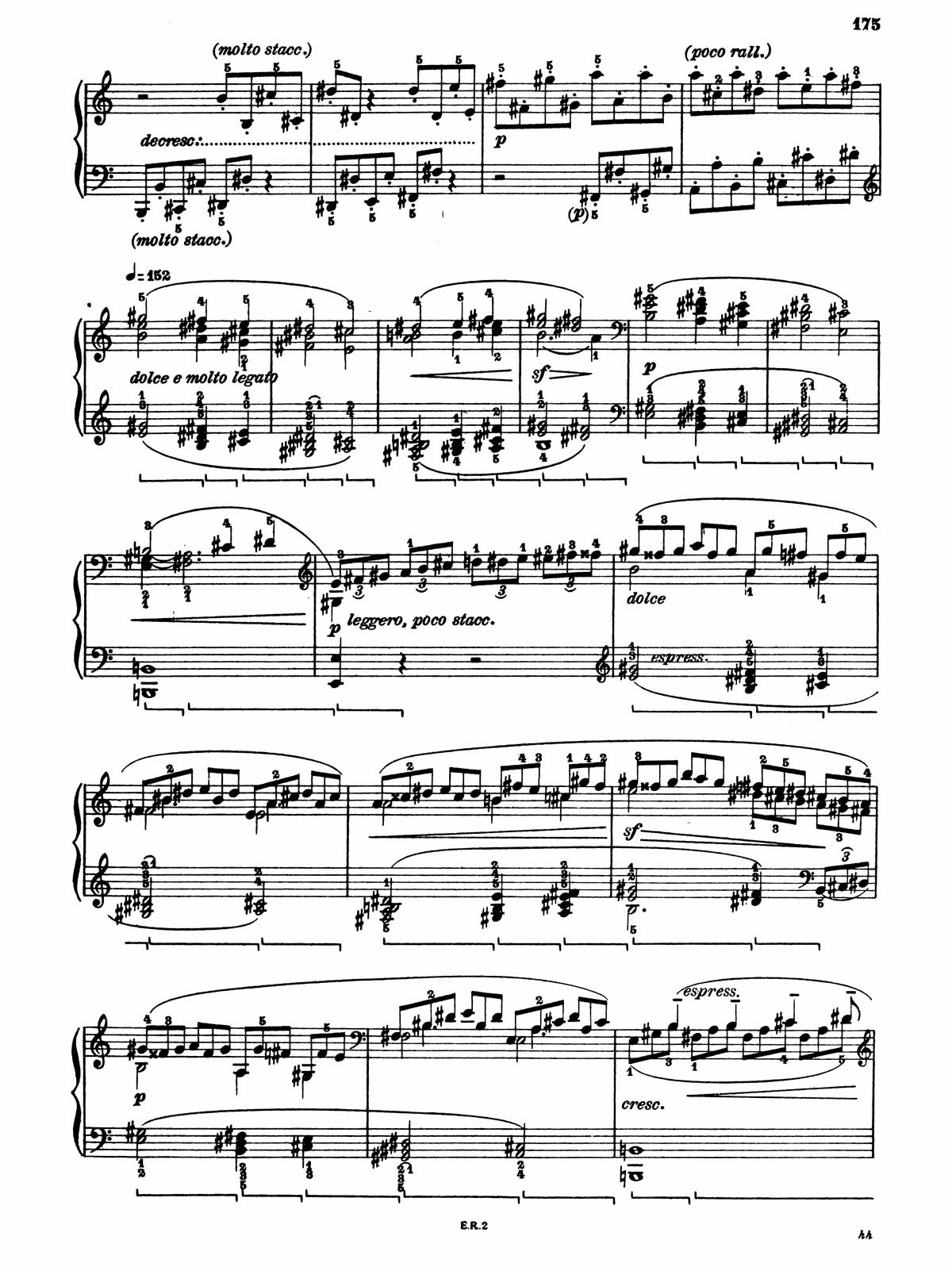
The entire second theme area is based on E major, first introducing a chorale-like second theme, and then based on arpeggios, a passage that leads to a climactic cadence in E. An earlier example of a tonic-median relationship in the key of C is the relationship between the tones of the first and second movements of the sonata no. 3.

Measures 74 to 85

A closing cadence section in A minor, E minor, and, when the repeat is taken, C major. The second ending leads to a development section that opens in F major.

Development

The development features the exposition's opening theme and the arpeggio-based passage of the second theme, in that order. It presents the exposition themes in the order of their first appearance is a resource also used in the development of the sonatas no. 1, no. 10, no. 19, no. 20, no. 14, third movement and the no. 23.

Bars 90 to 112

The opening phrase of the first theme is stated entirely in F major, but then its final figure breaks off and is developed separately, playing in the keys of G minor, C minor and F minor, C♭ major, A♭ major and F minor, forming a final cadence that reaches C major.

Measures 112 to 142

The arpeggio-based passage of the second theme extends, then fragments, moving to C major, F major, B♭ major, E♭ minor, B minor, and C minor, finally coming to rest on the dominant seventh of C. .

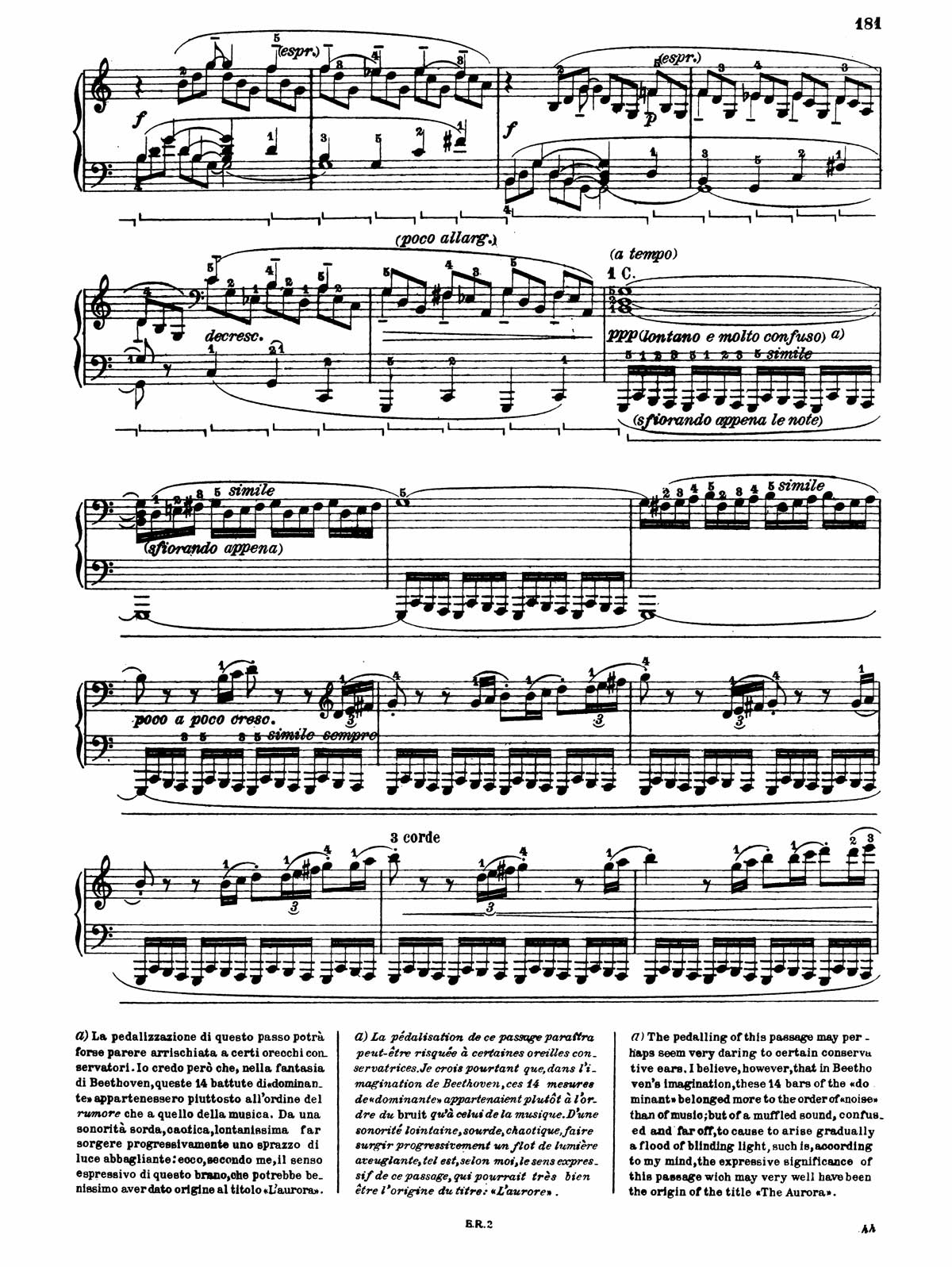
Measures 142 to 156

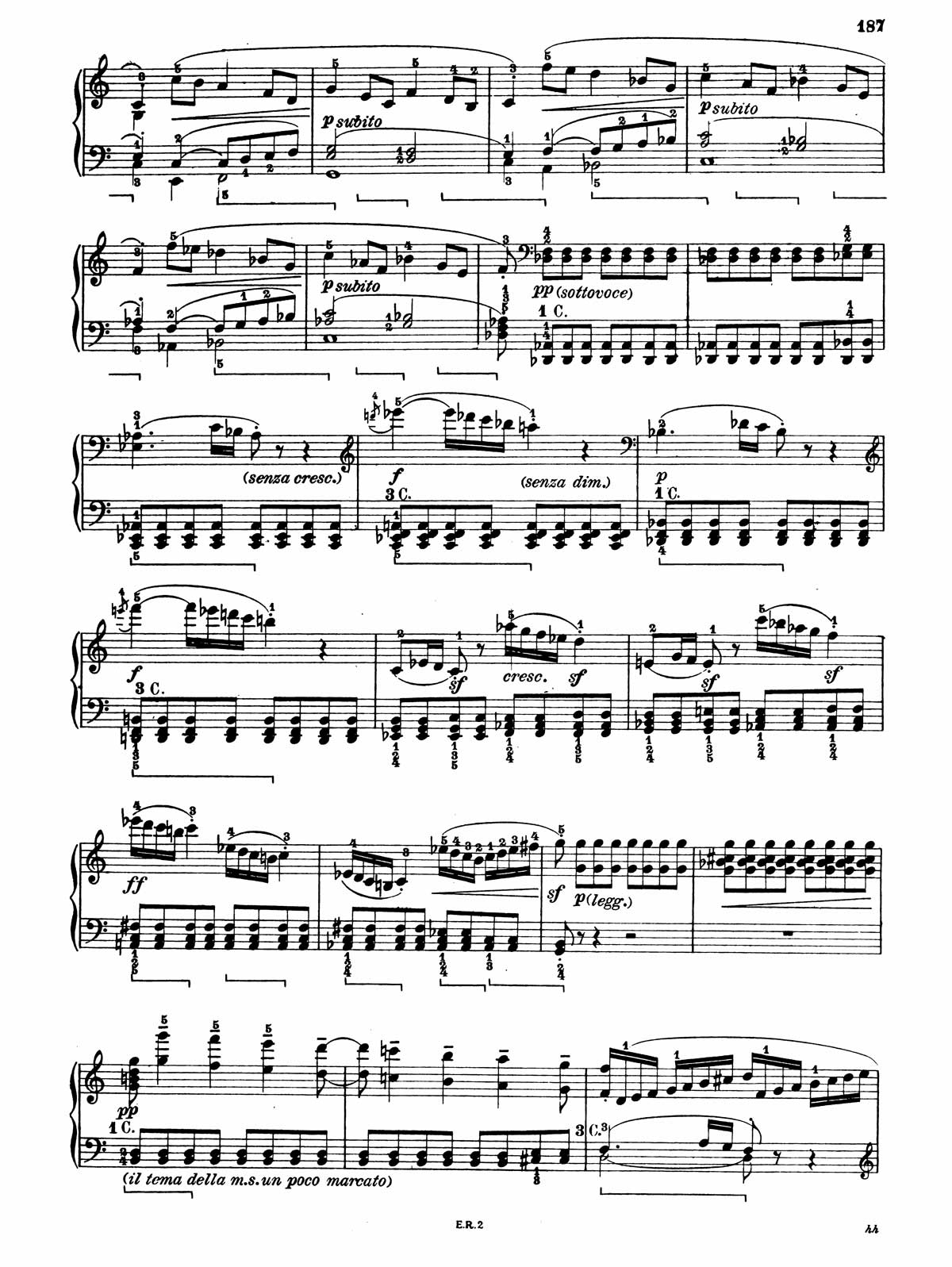
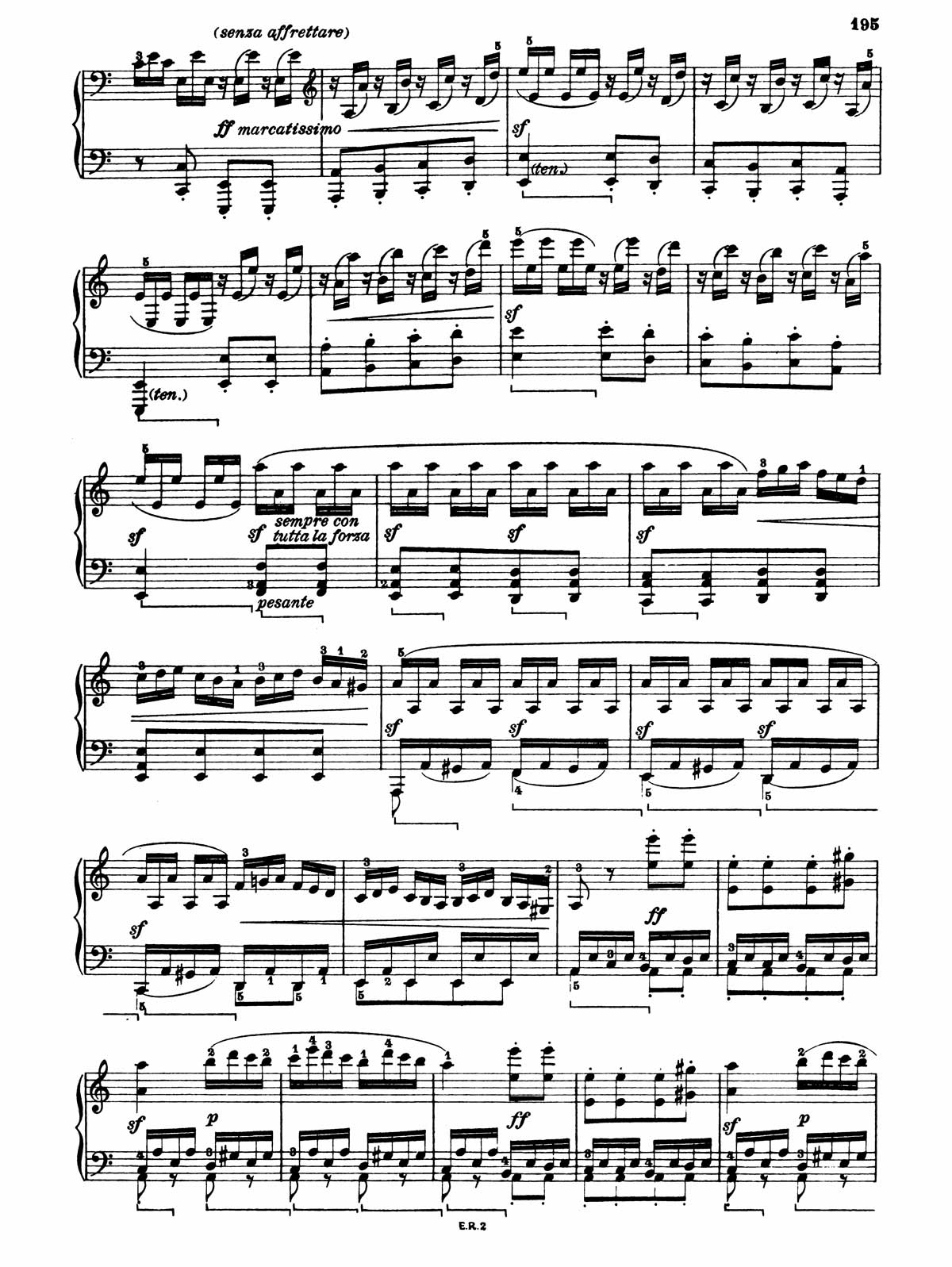
The transition to the recapitulation is one of the most exciting of all the sonatas, rivaled only by that of the sonata no. 23. A low ostinato built on the dominant is joined by rising figuration in the right hand ultimately based on some notes from the main theme. After this combination it reaches its peak, with figuration marked with sforzandi and a scale in contrary movement introductory to the recapitulation.

Recapitulation
Measures 168 to 173

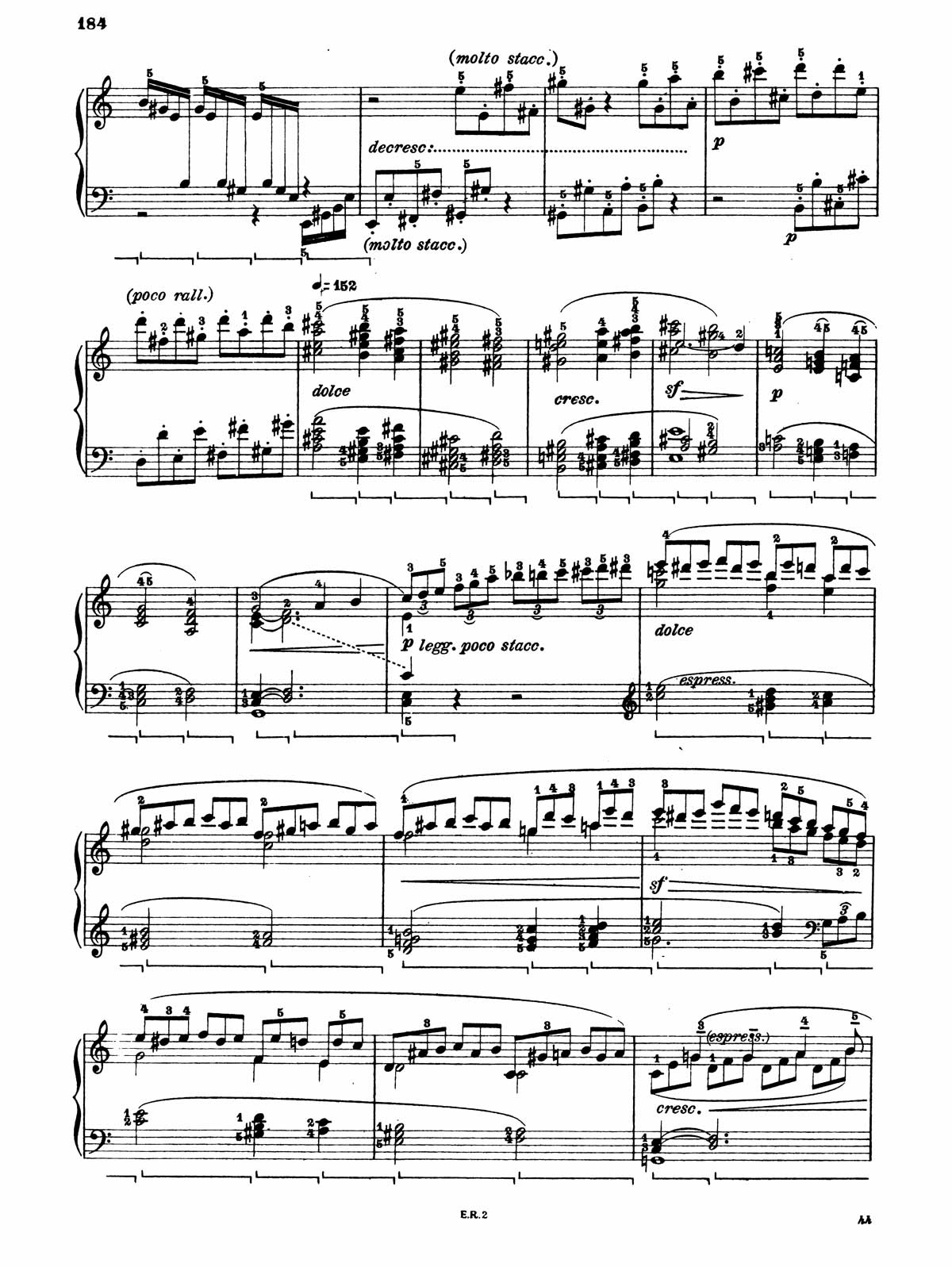
A delightfully provocative return opens at the end of a phrase in the exposition on the “wrong” note, A♭ instead of G. Assuming the wrong note to represent the dominant of a new pitch, the phrase repeats in D♭ major, but now ends in B♭. As if to accommodate the "wrong" note a second time, the phrase he repeats is in E♭ major but cleverly modulates back to the starting key, C major.

Measures 184 to 210

The transition to the second theme sets the key of A major. The second theme is stated in that key, but in a restatement it opens in parallel minor, A minor, and resolves in C major for the rest of the second theme area of the recapitulation.

Measures 245 to 248

The cadence of the closing section in C major moves to F major, then parallel minor, unexpectedly closing the phrase with a tricky cadence that moves to D♭ major.

Coda
Measures 249 to 259

The coda is a long development, rivaled in emotion only by the coda of the first movement of sonata no. 23. The first theme opens in D♭ and breaks up as it progresses in B♭ minor and C minor.

Measures 261 to 302

The opening theme is then set to C major, but fragments as it builds to a keyboard-spanning climax ending in the dominant. The second theme is raised again, closing with prolonged half cadences on the opening tone. Finally, the repeated notes that open the first theme lead to a strong descending scale and the final cadence.


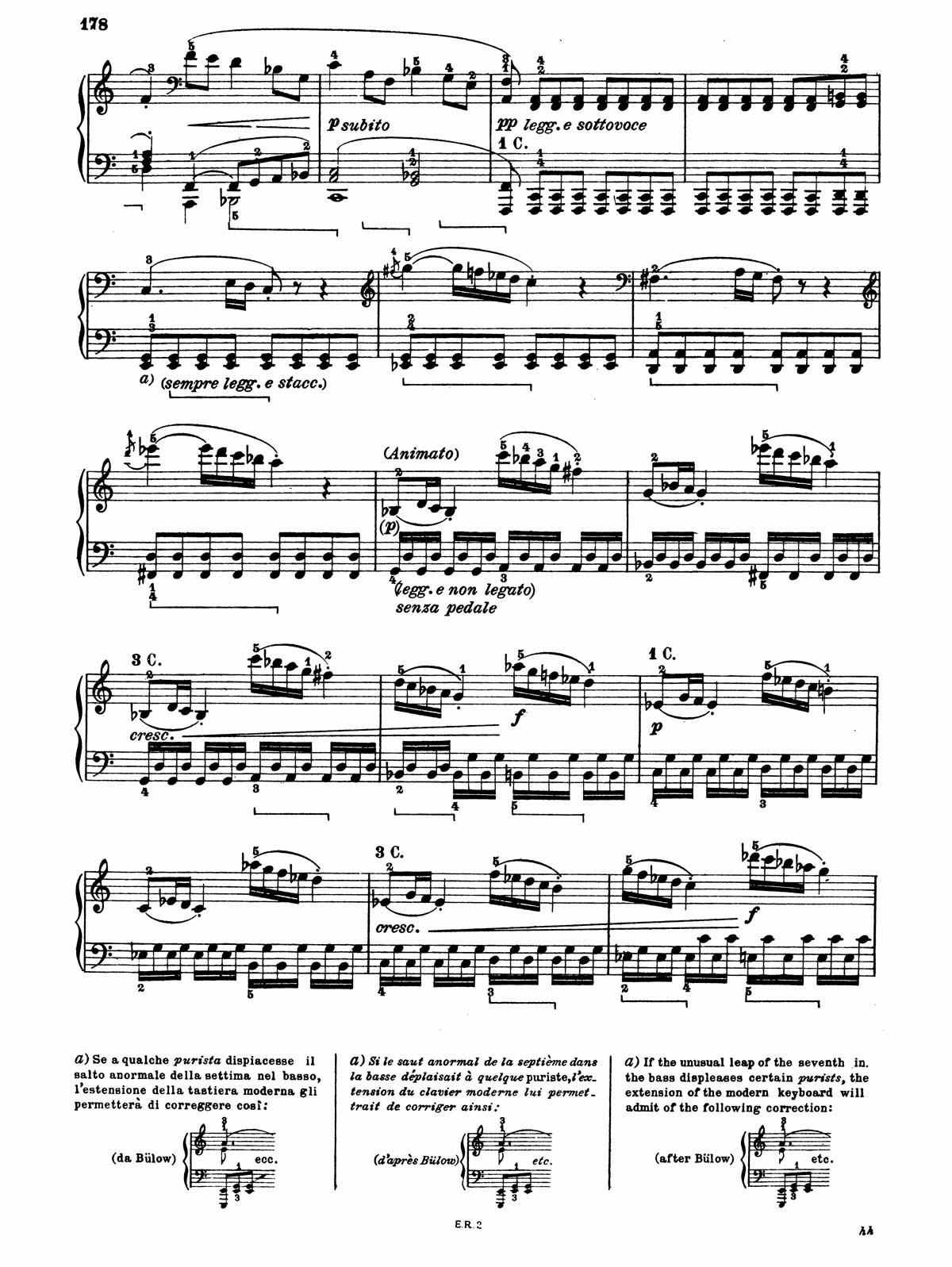
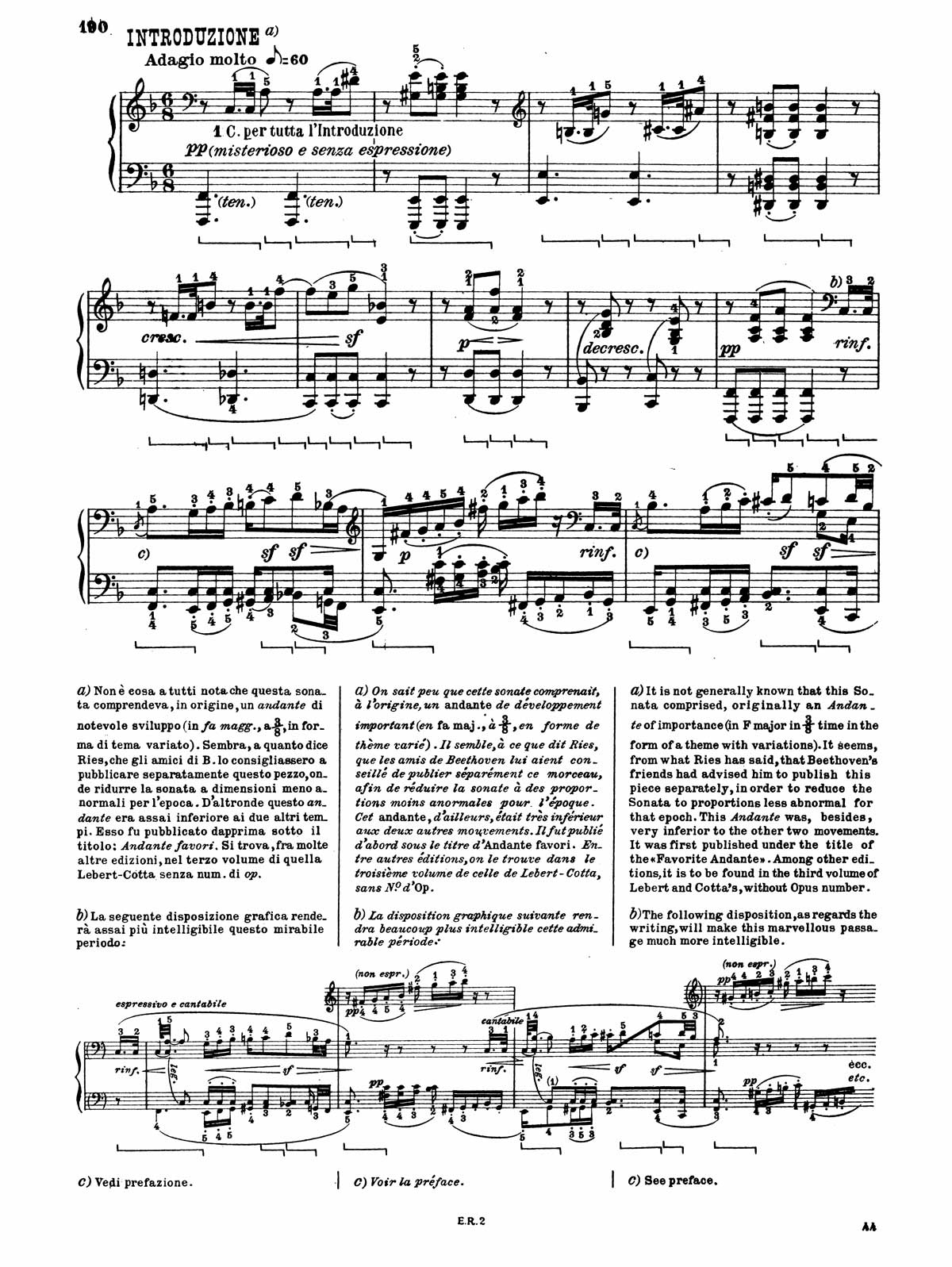
Second Movement: F major | Adagio molto | 6/8 | A|B|A, atacca subito the next movement

Structure

The outer A sections are motivic and improvised, the B section features a seven-bar melody in F major. The mood is one of serene contemplation.

Measures 1 to 9

An ascending dotted rhythm motif appears to open in F major but is resolved in E major by moving down to the seventh degree of the scale and treating the harmony as an augmented sixth. The idea is repeated, now opening in the parallel minor, E minor, but resolving as a dominant inverted to B major. A third entry shifts the root down a half step, creates an augmented sixth, and resolves to the dominant of the starting tone, C7. Then a cadence stops in F major. As in the opening of the first movement, Beethoven presents a virtuoso display of harmonic progressions.

Measures 10 to 16

A melodic theme in F major lengthens the opening figure of the movement in the first phrase, by two more bars, ending in the dominant, and by the second by two bars, the phrase returns to the tonic. A third statement leads back to section A.

Measures 17 to 28

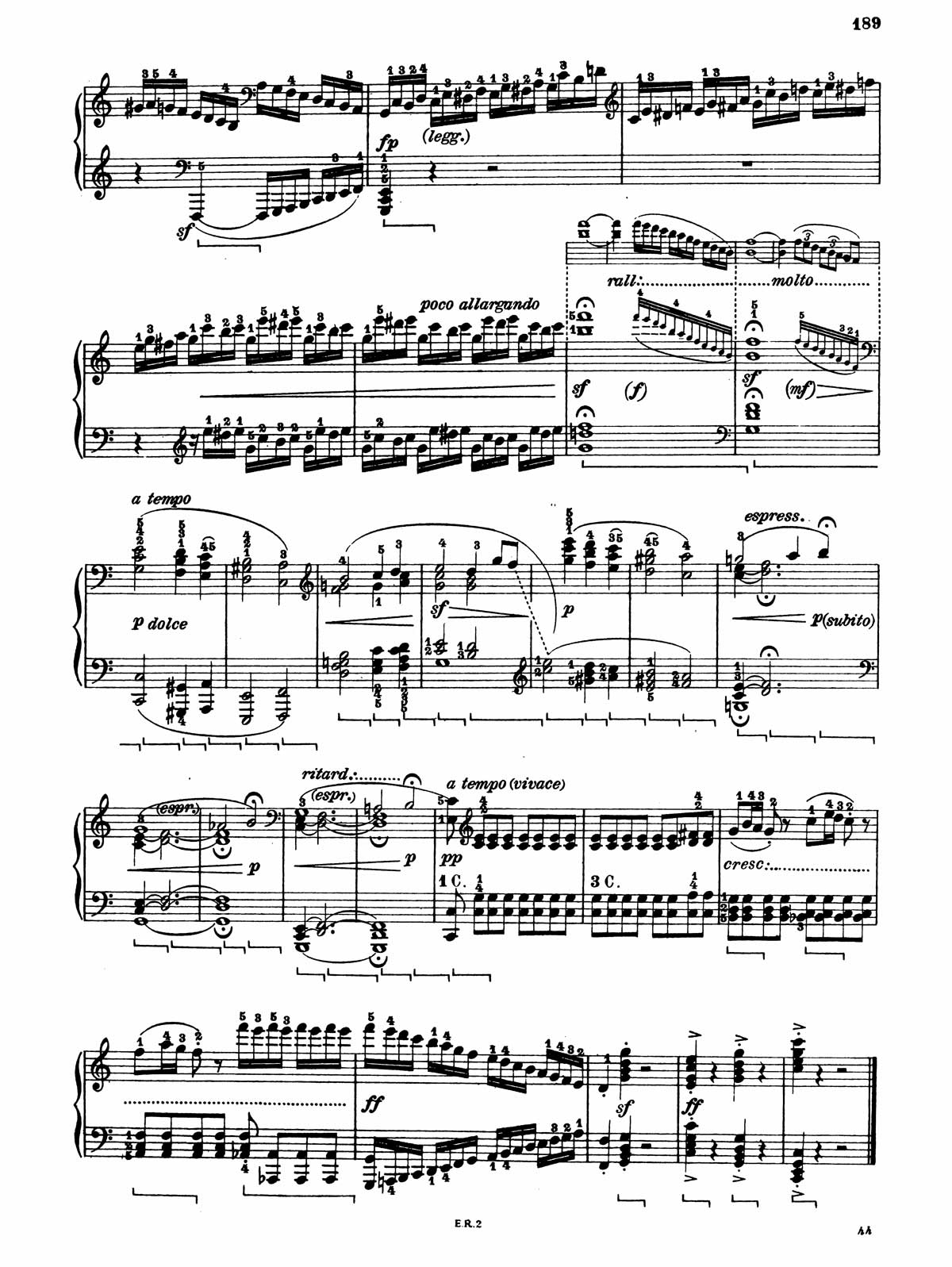
The first two statements of section A above are repeated. The third statement is extended, the opening motif rising to the dominant seventh of the sonata's opening key, C major, then descending to a final half cadence that leads, after a suspenseful fermata, to the beat of the final movement without interruption.


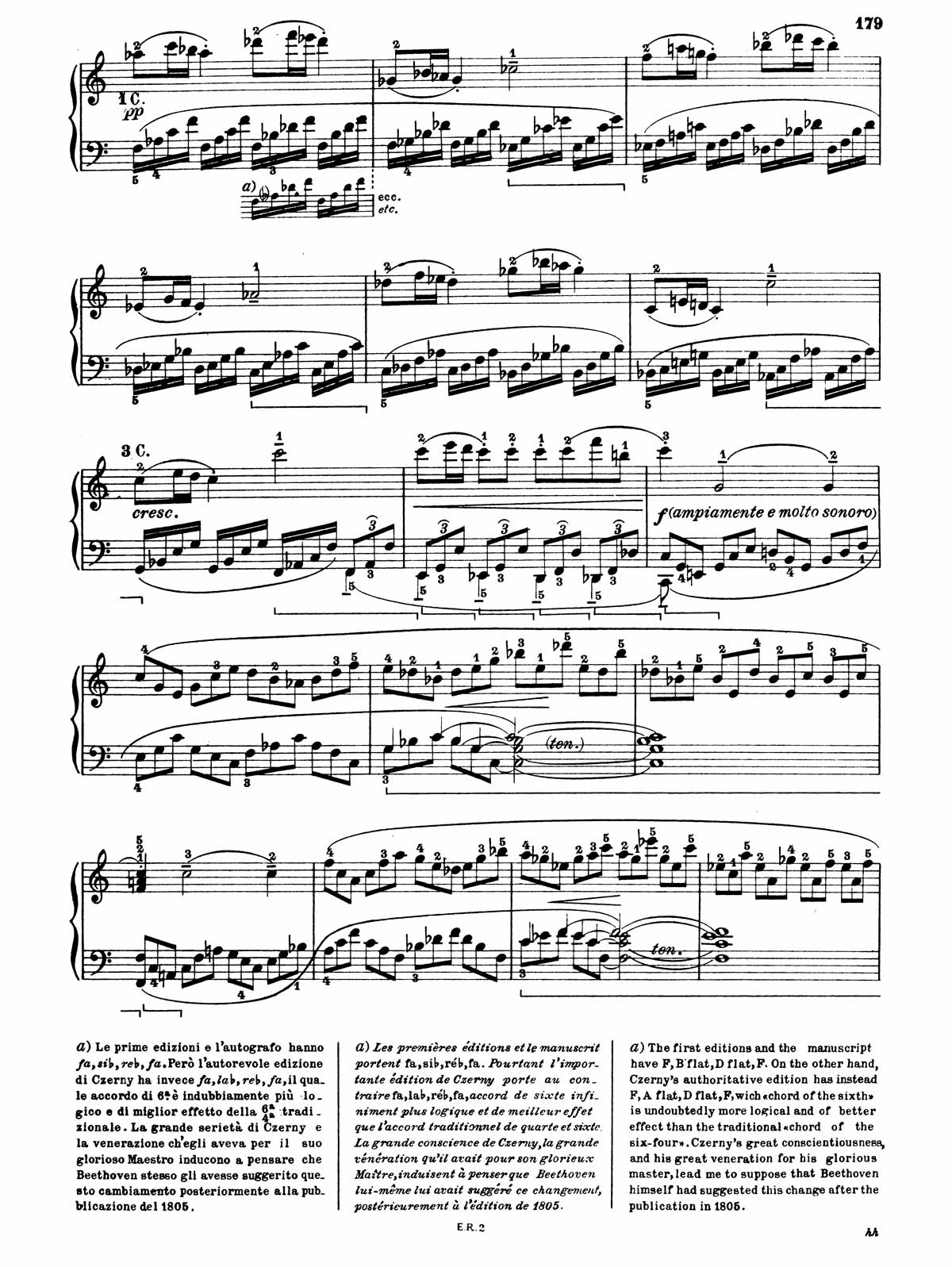
Third Movement | C major | Allegro moderato | 2/4 | Rondo | A|B|A|C development and coda

Measures 1 to 62

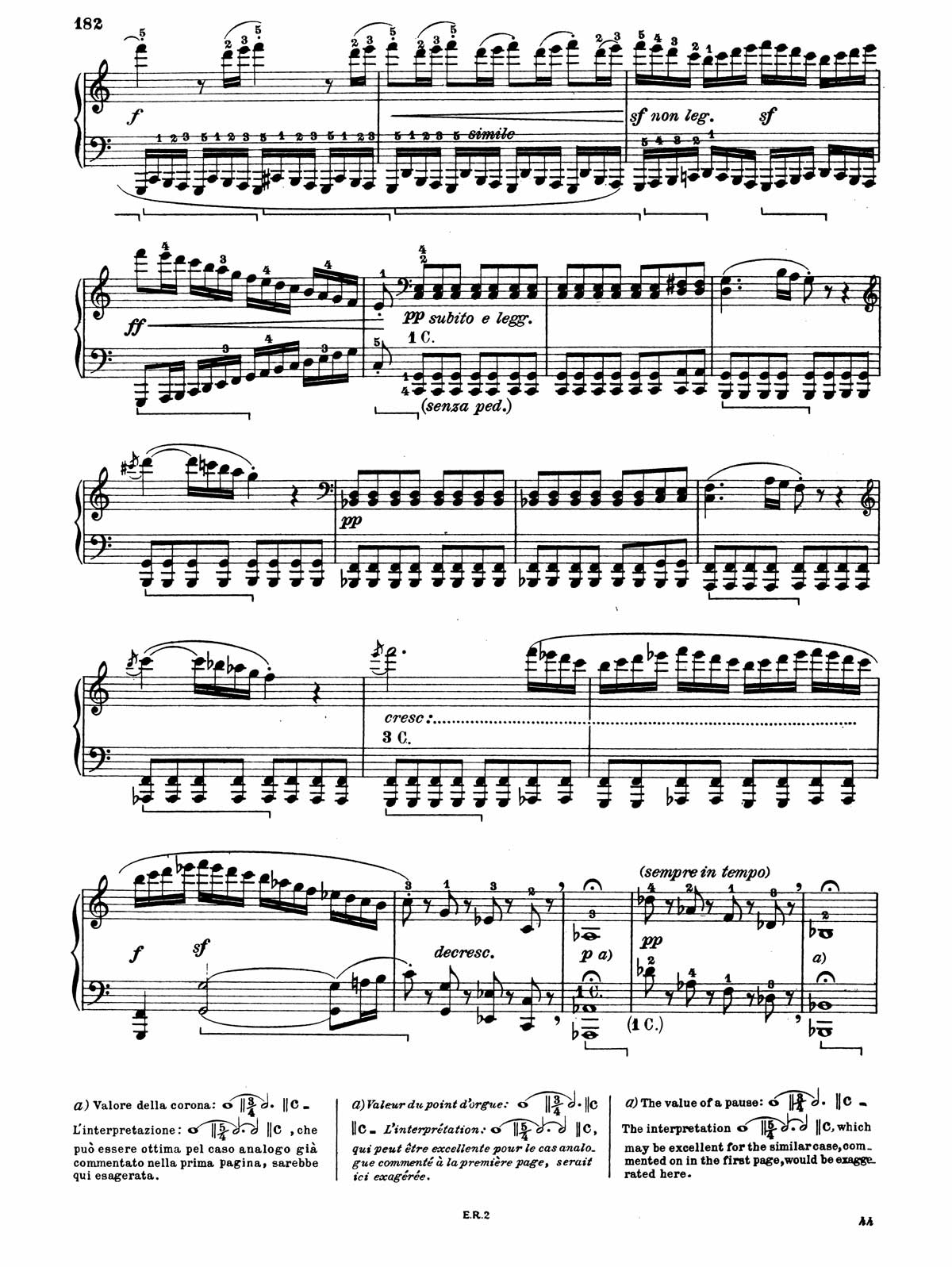
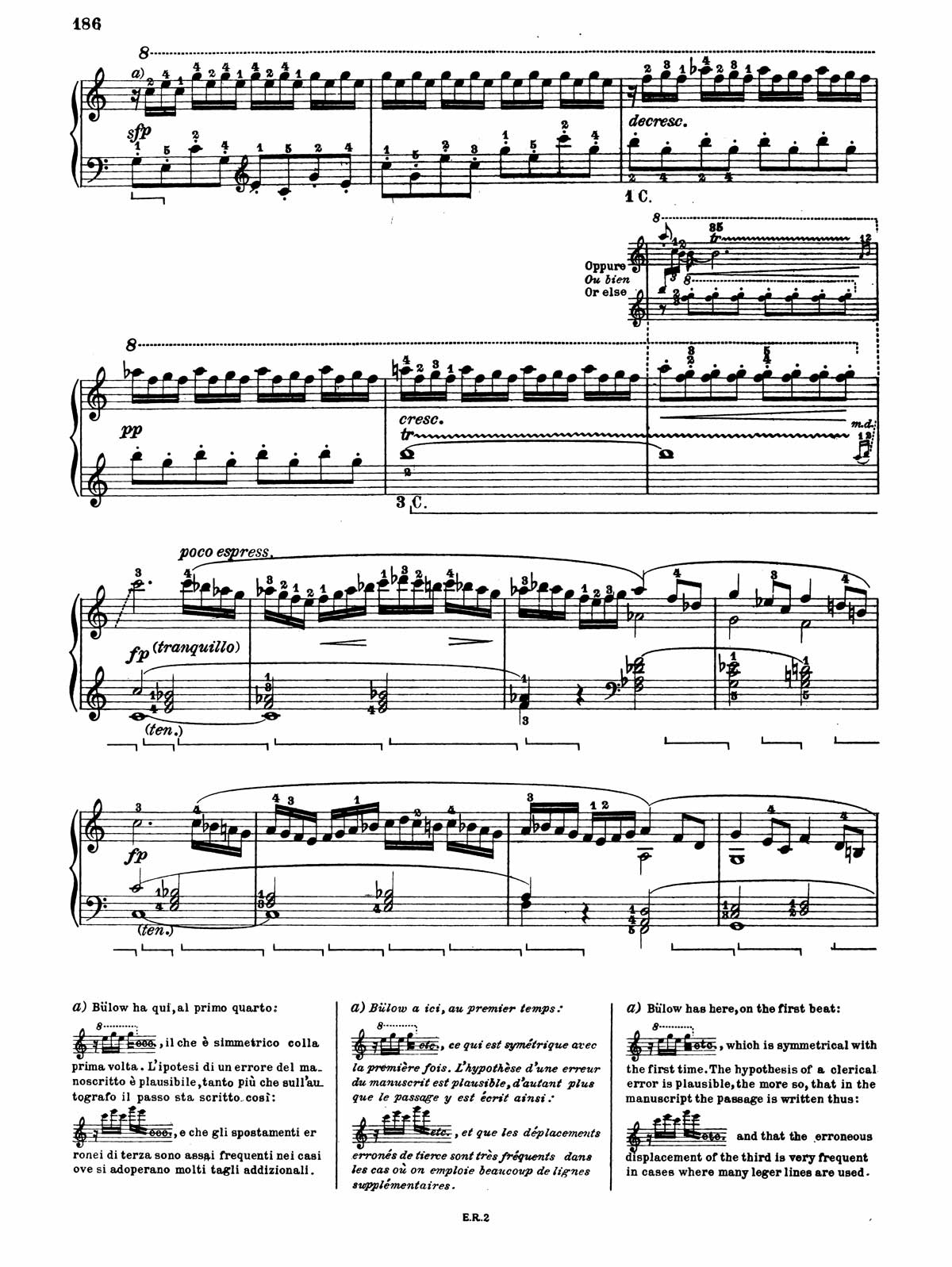
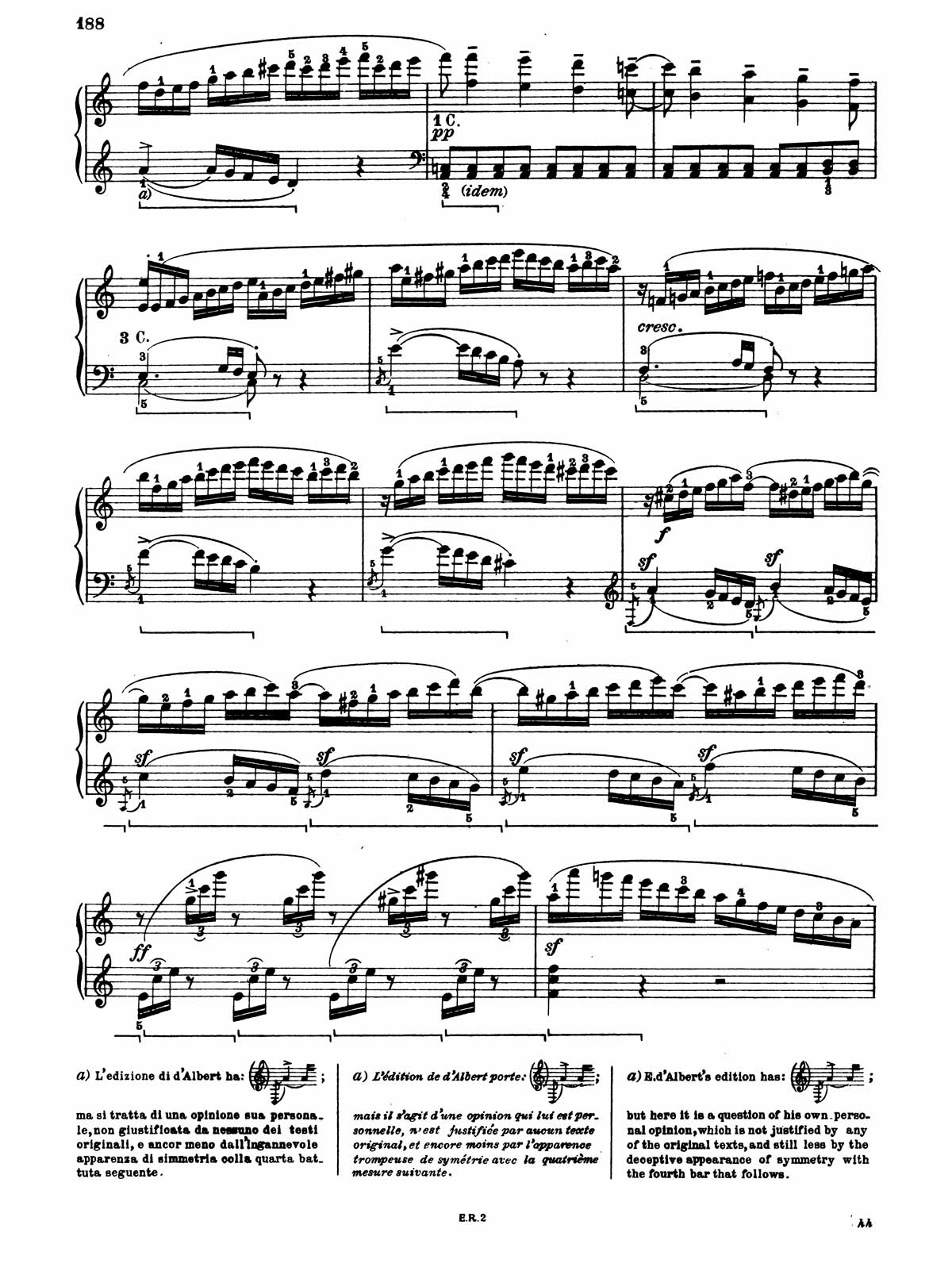
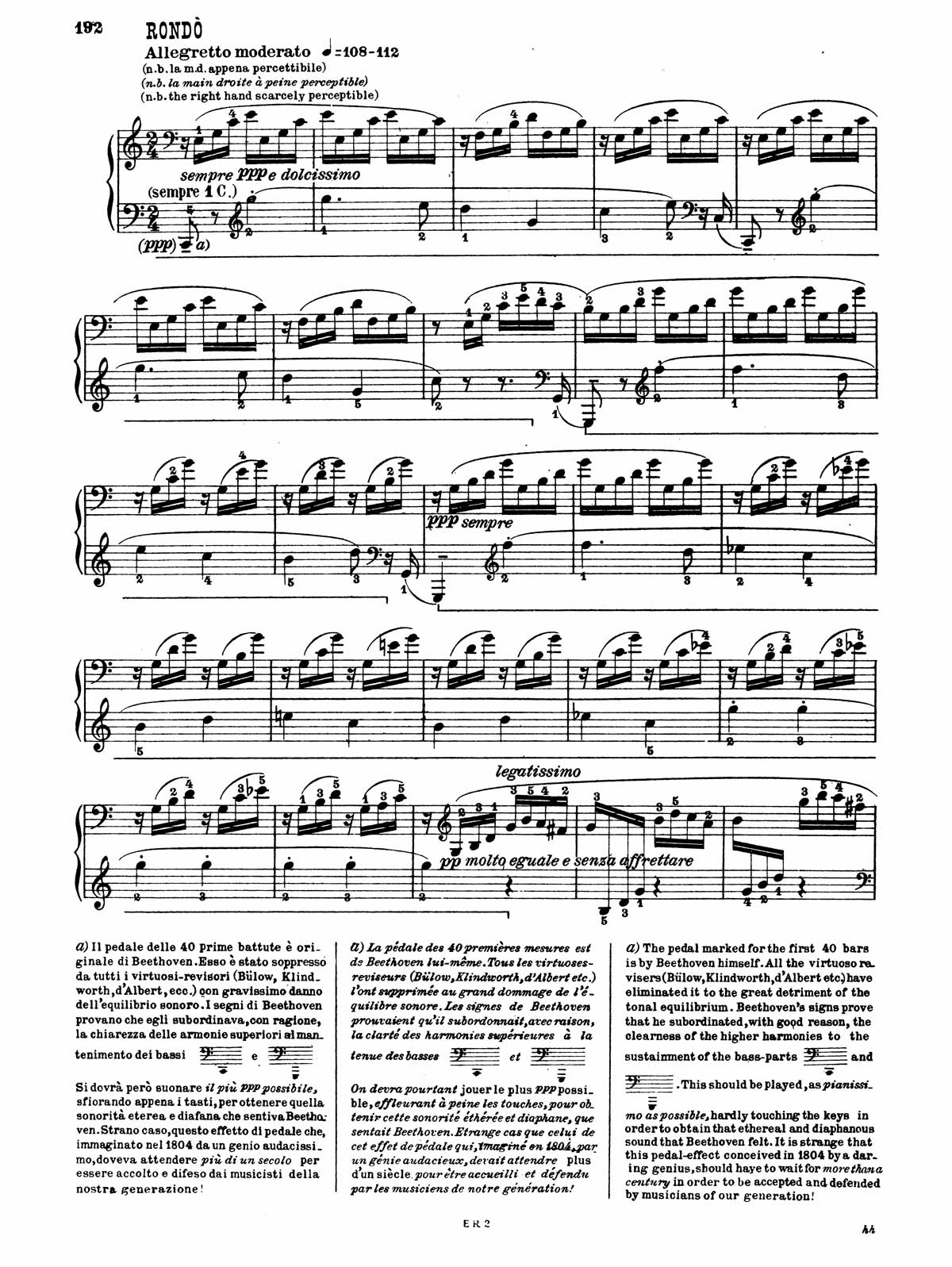
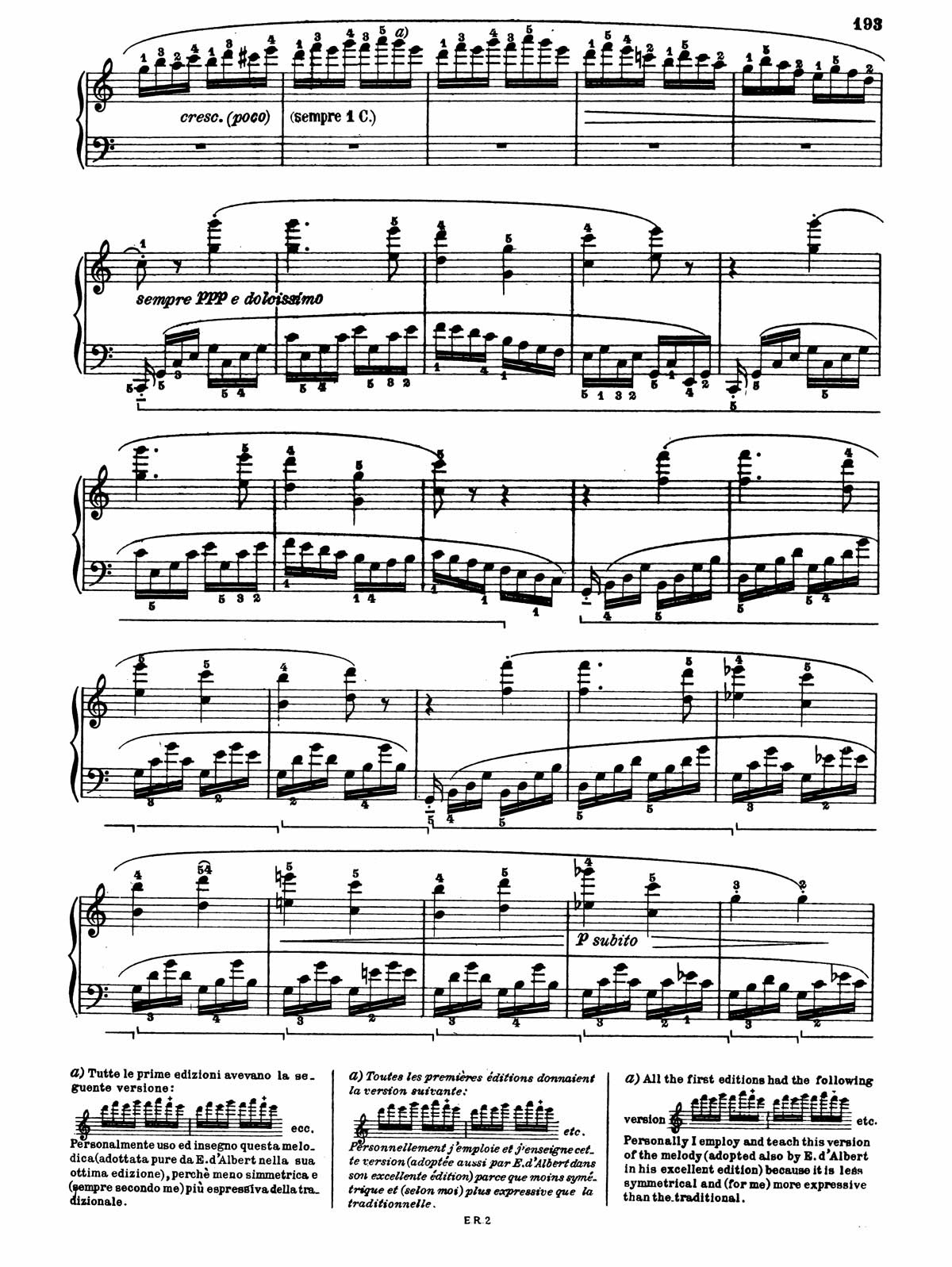
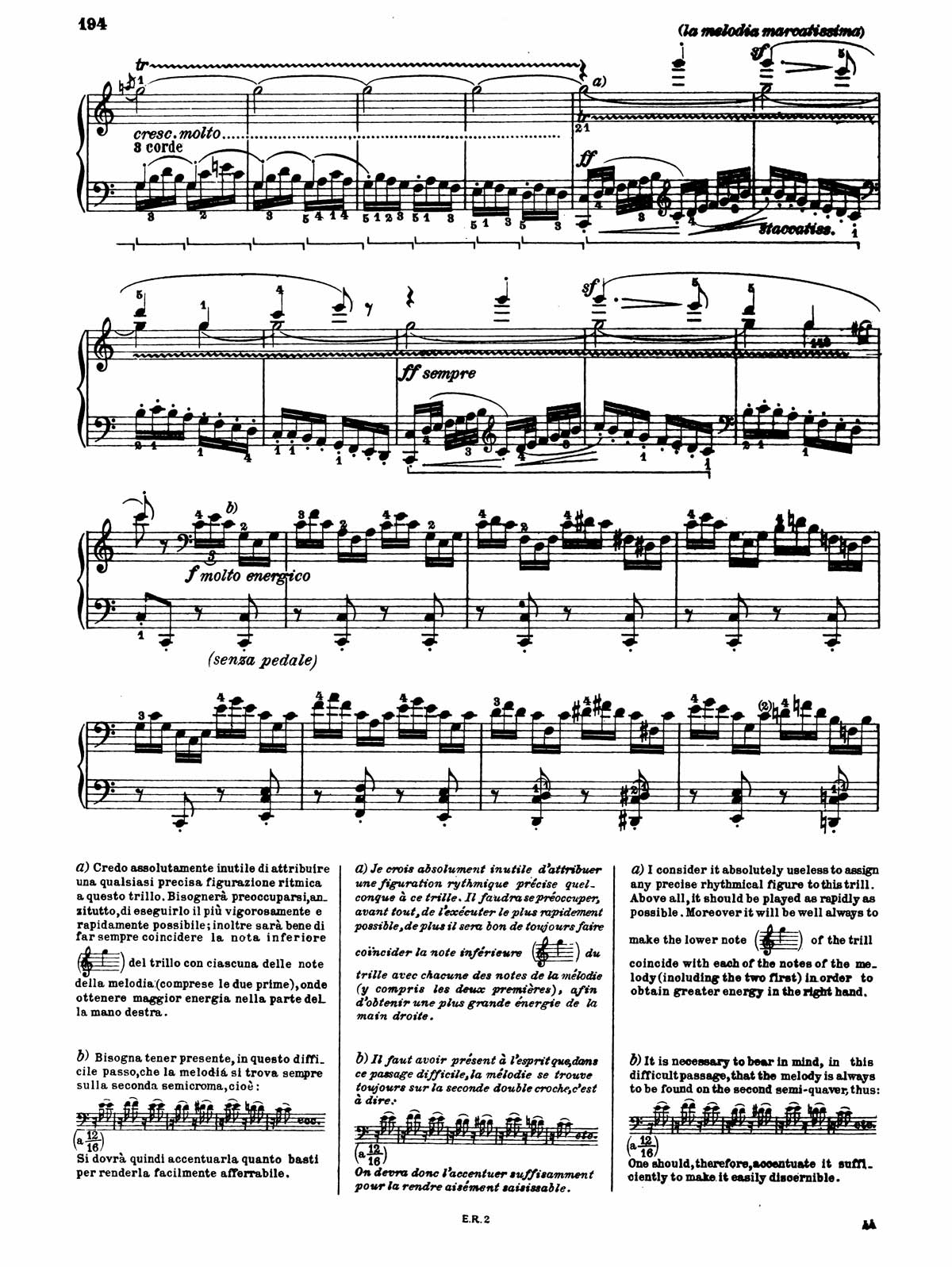
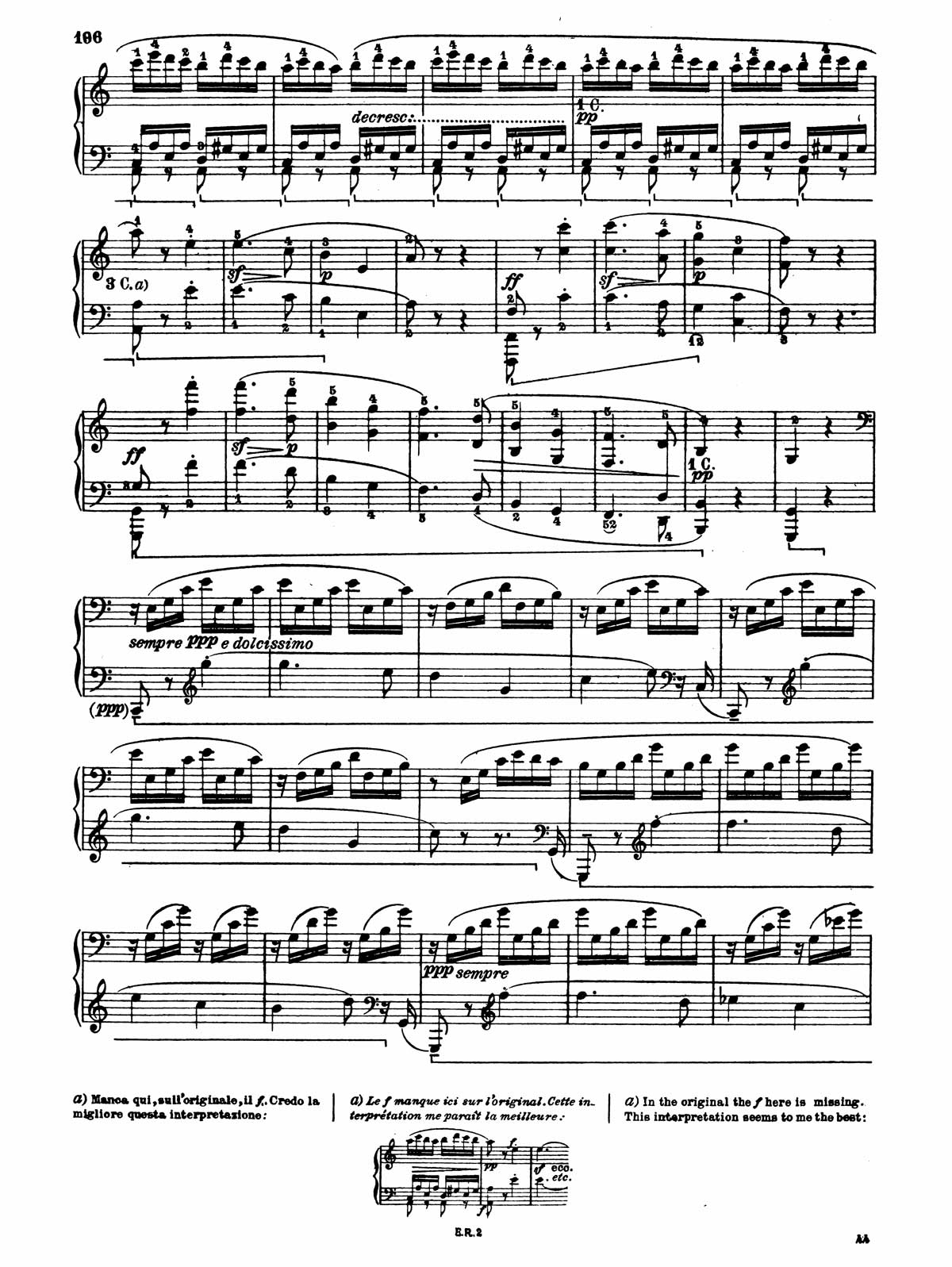
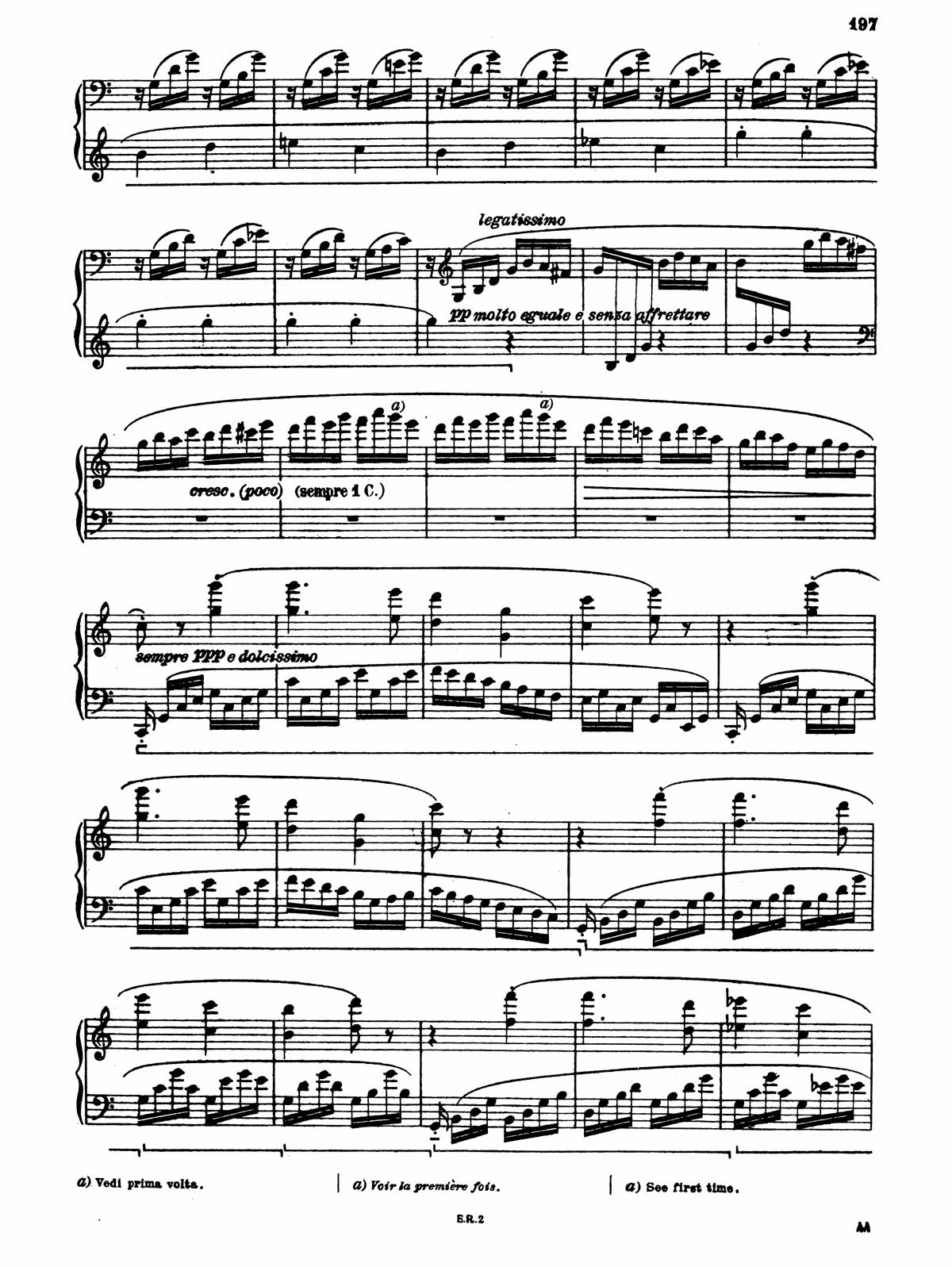
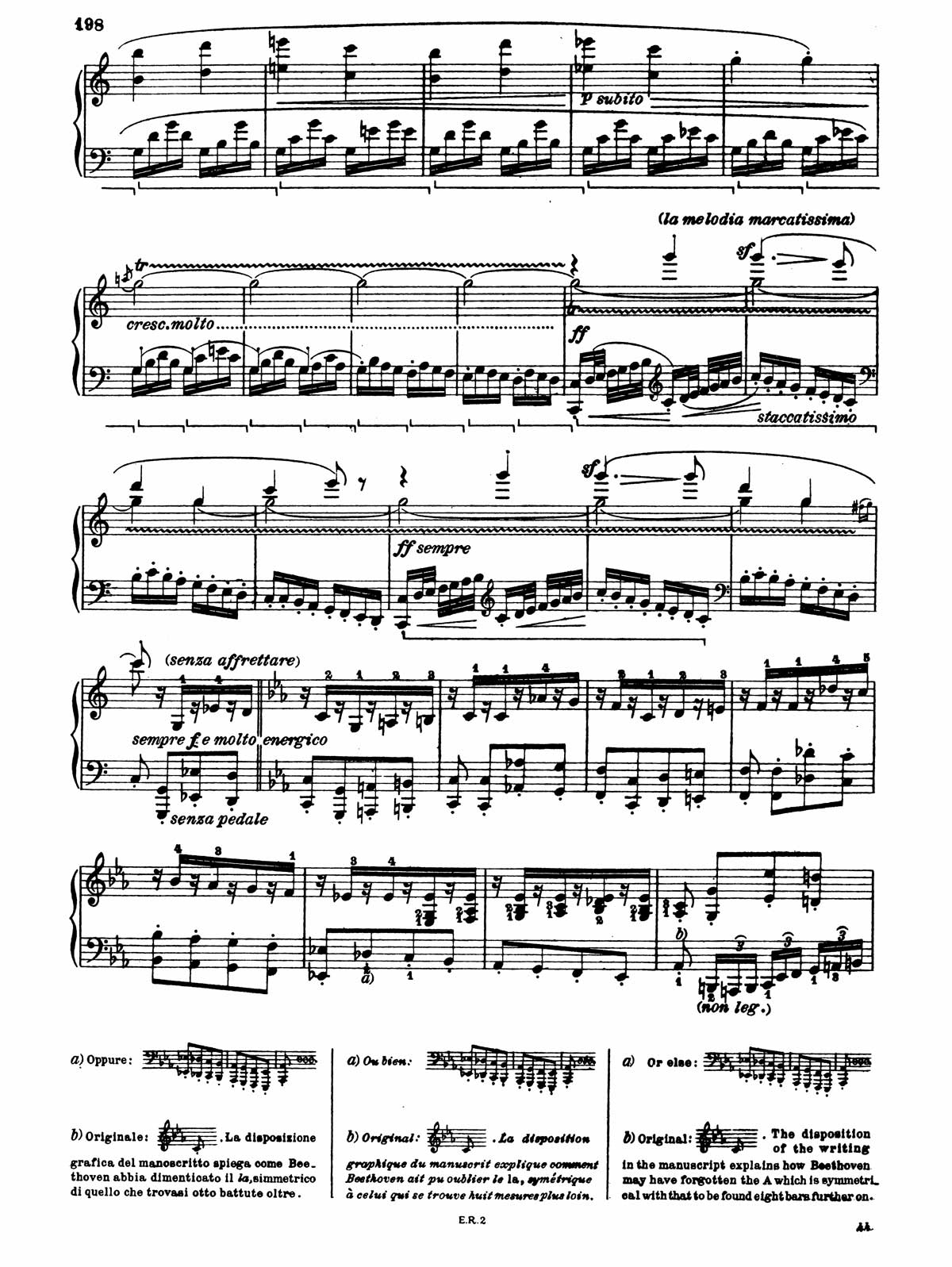
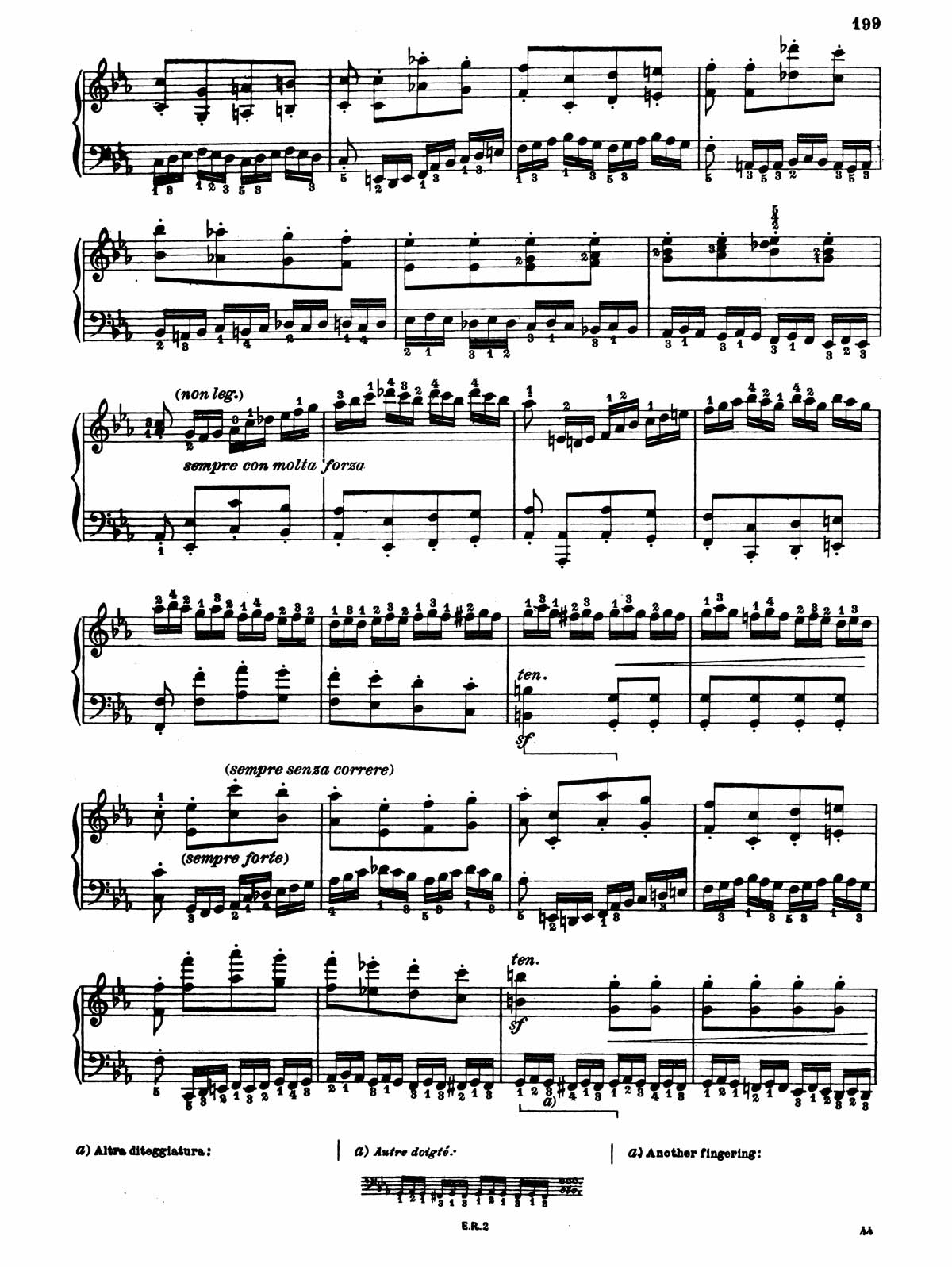
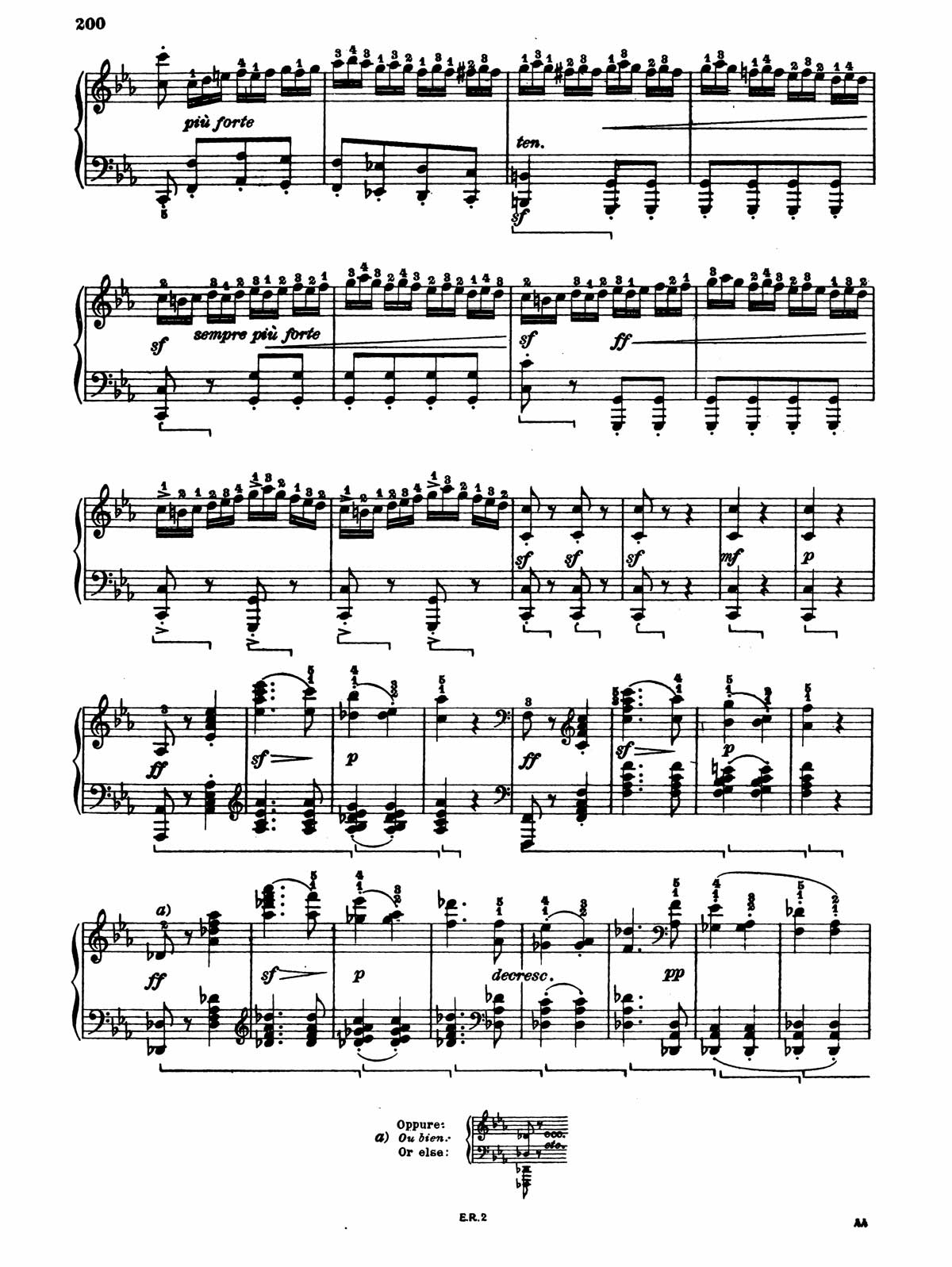
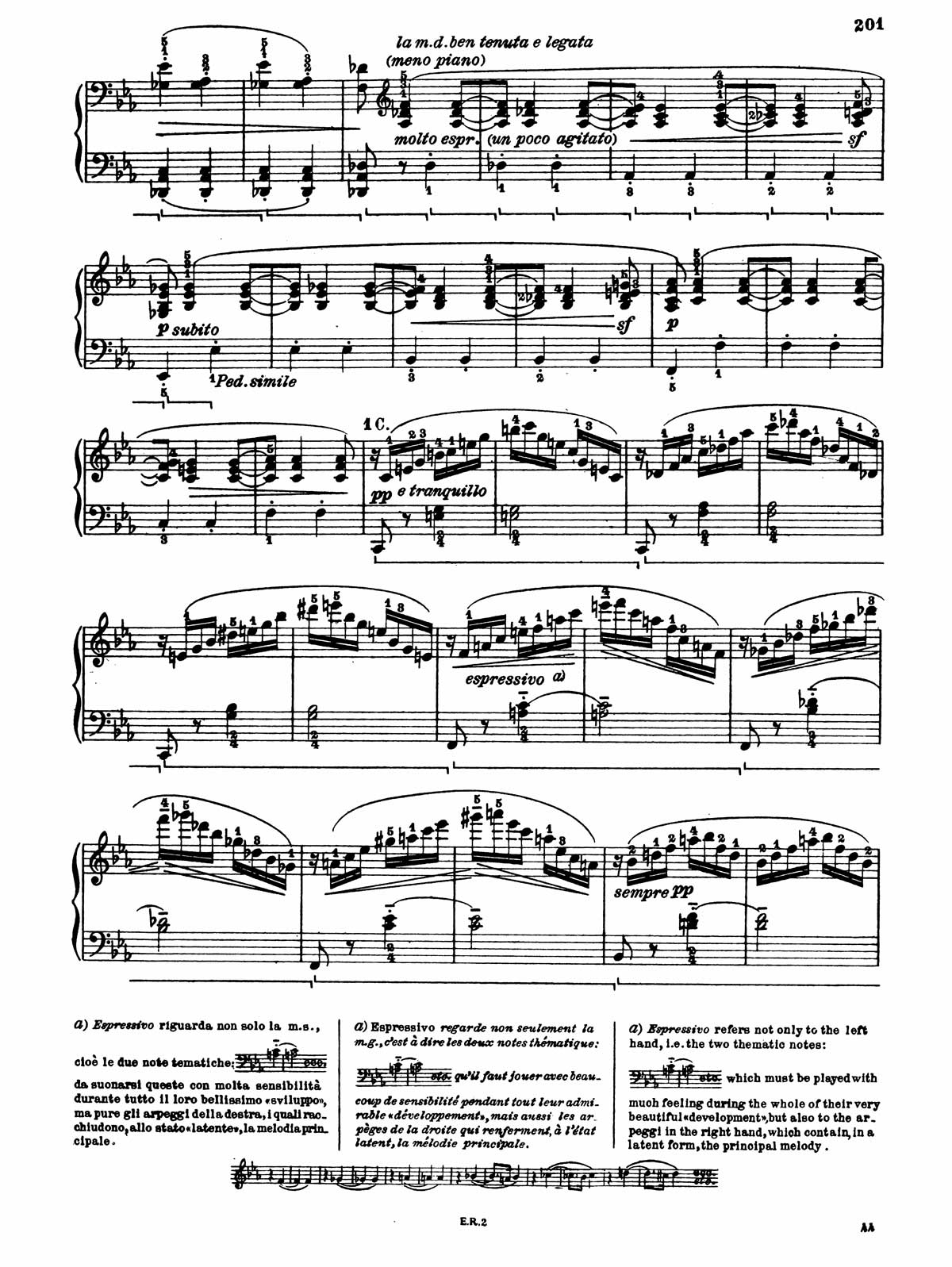
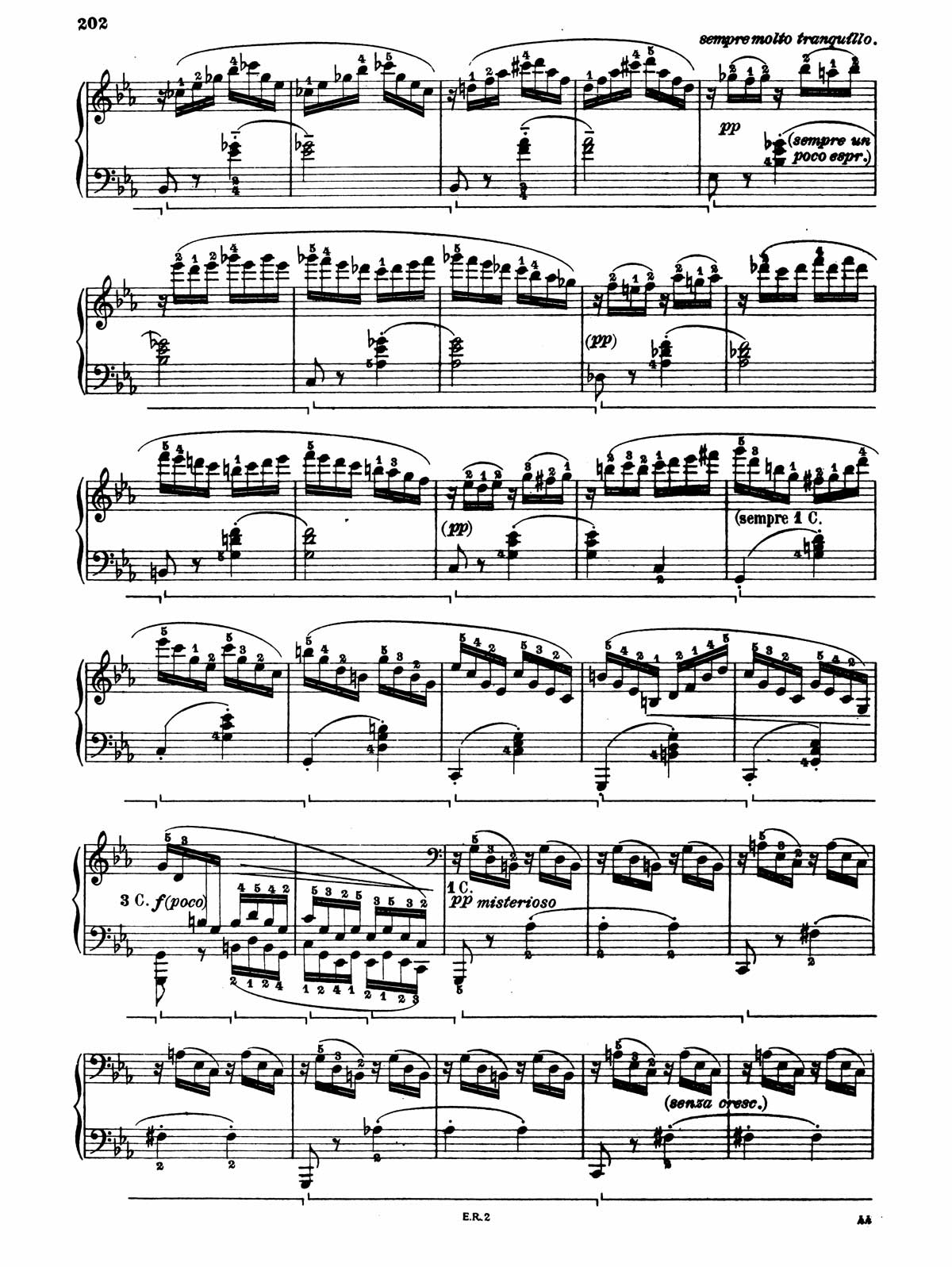
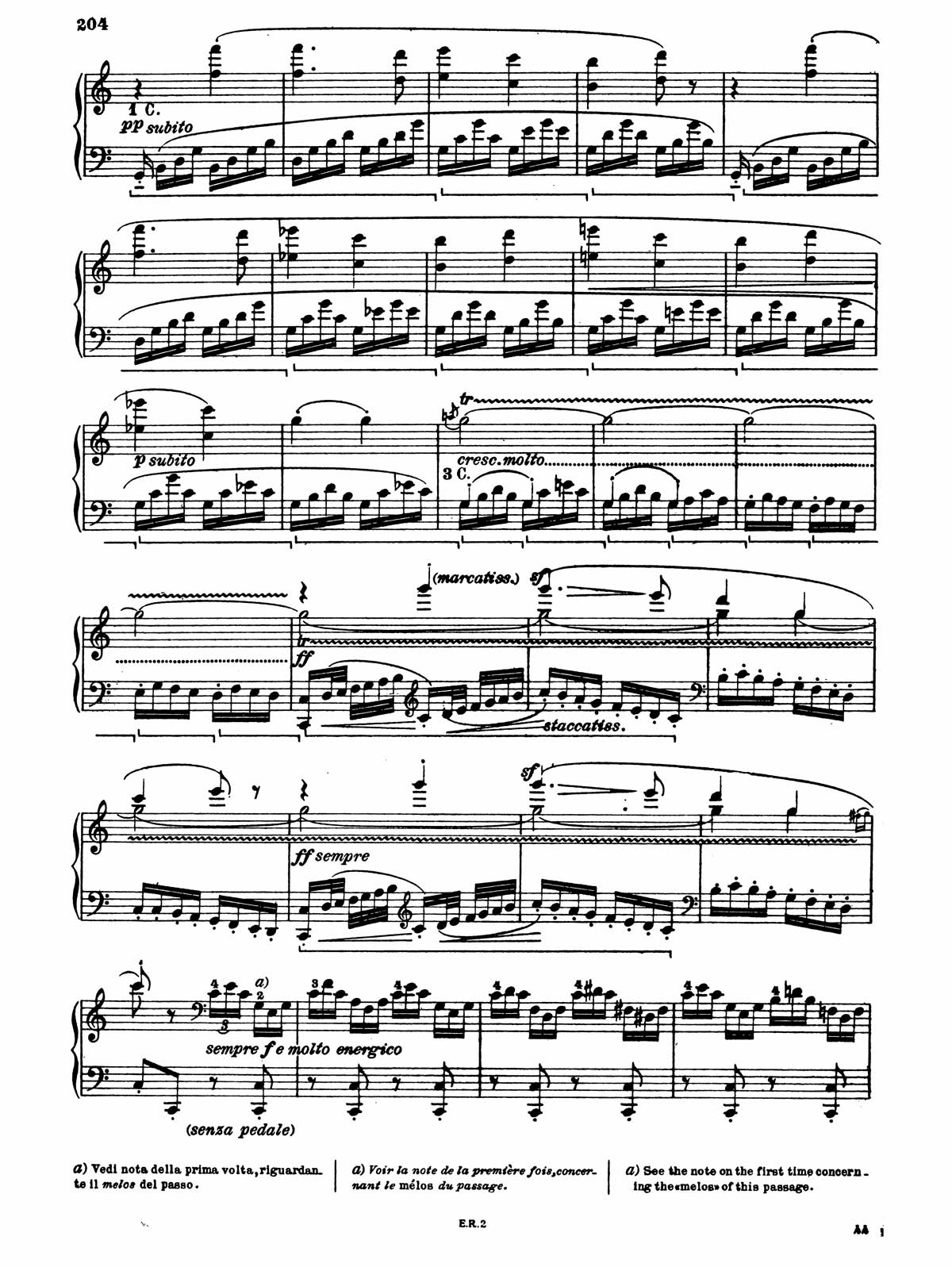
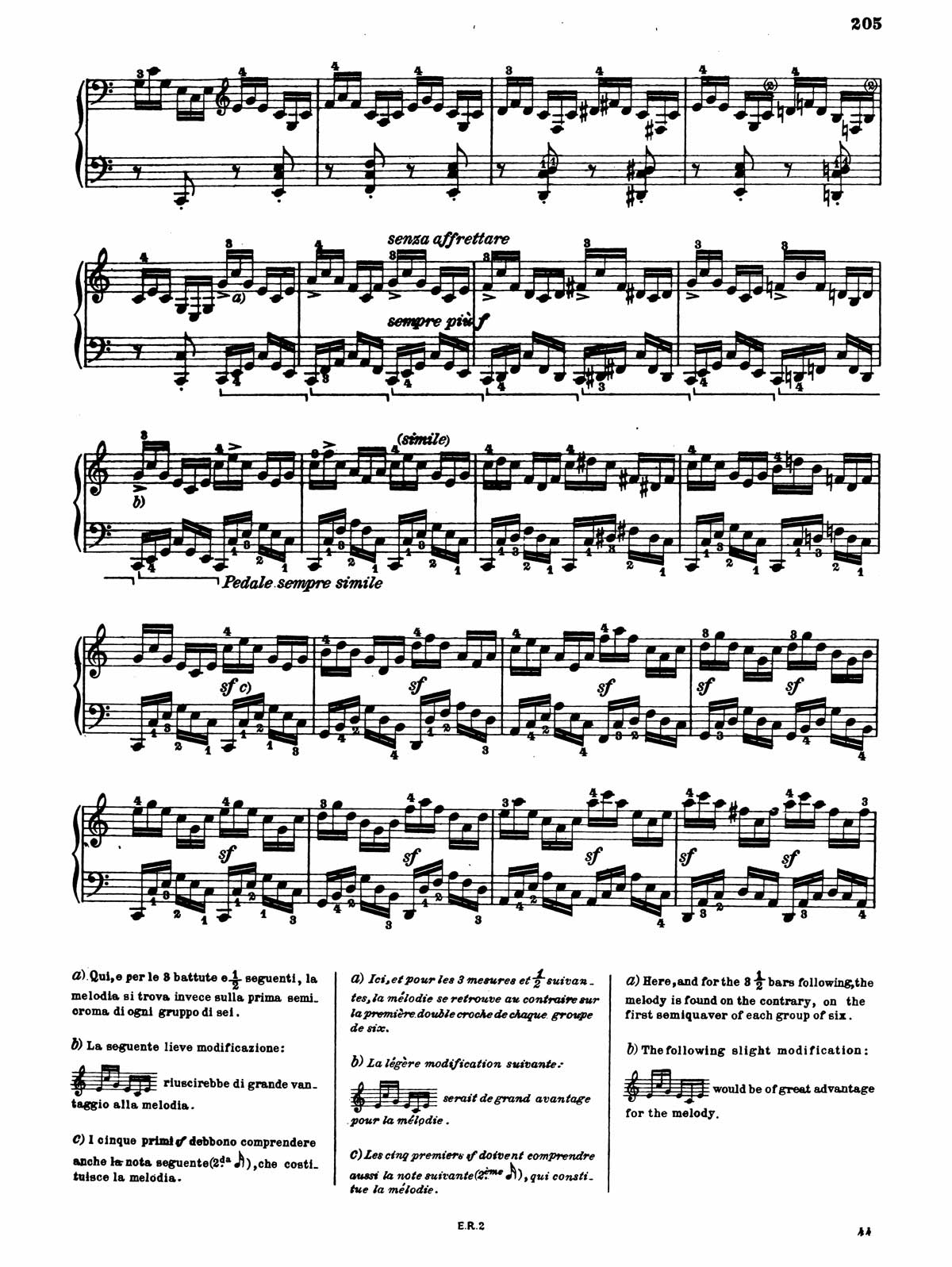
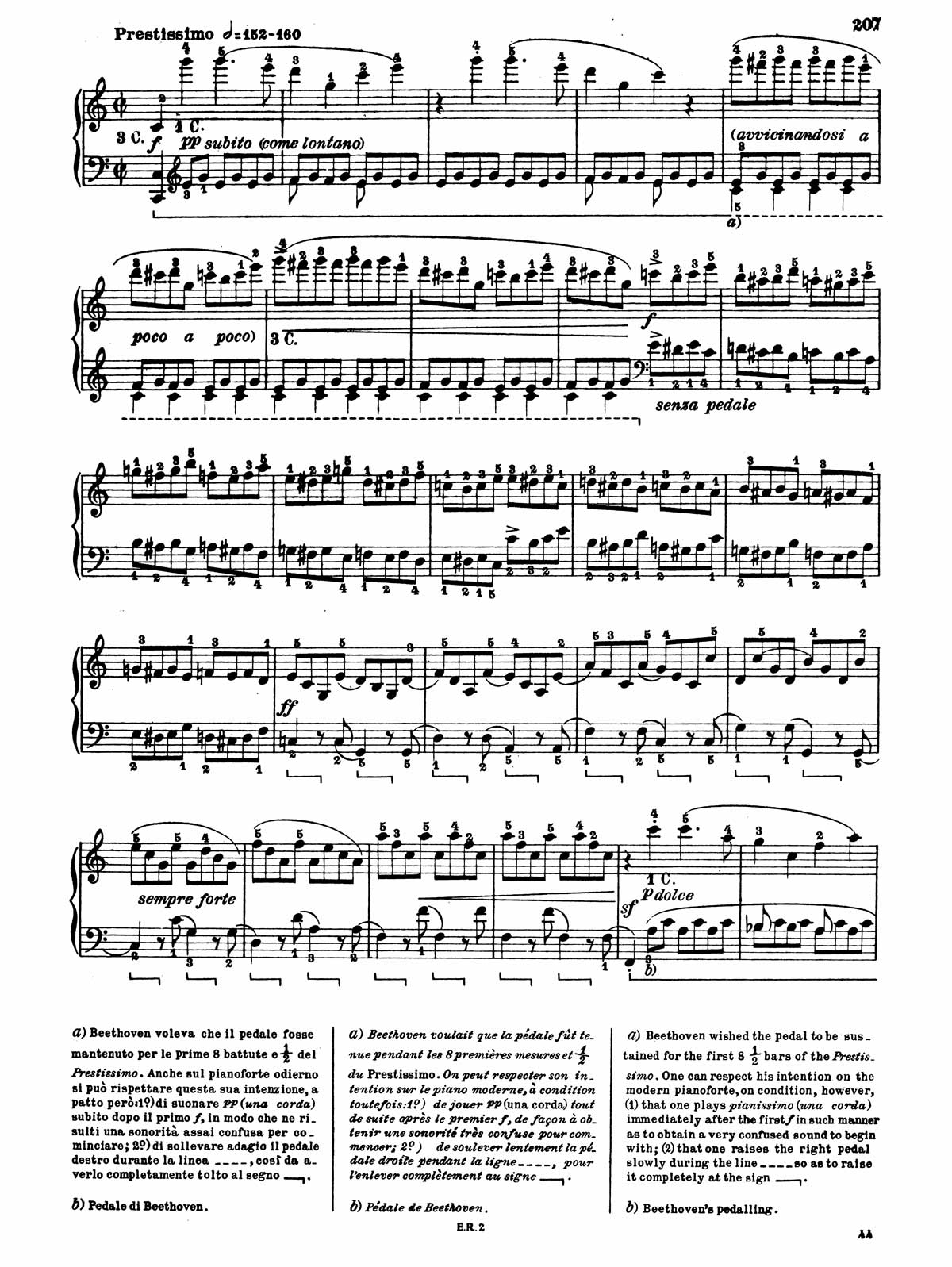
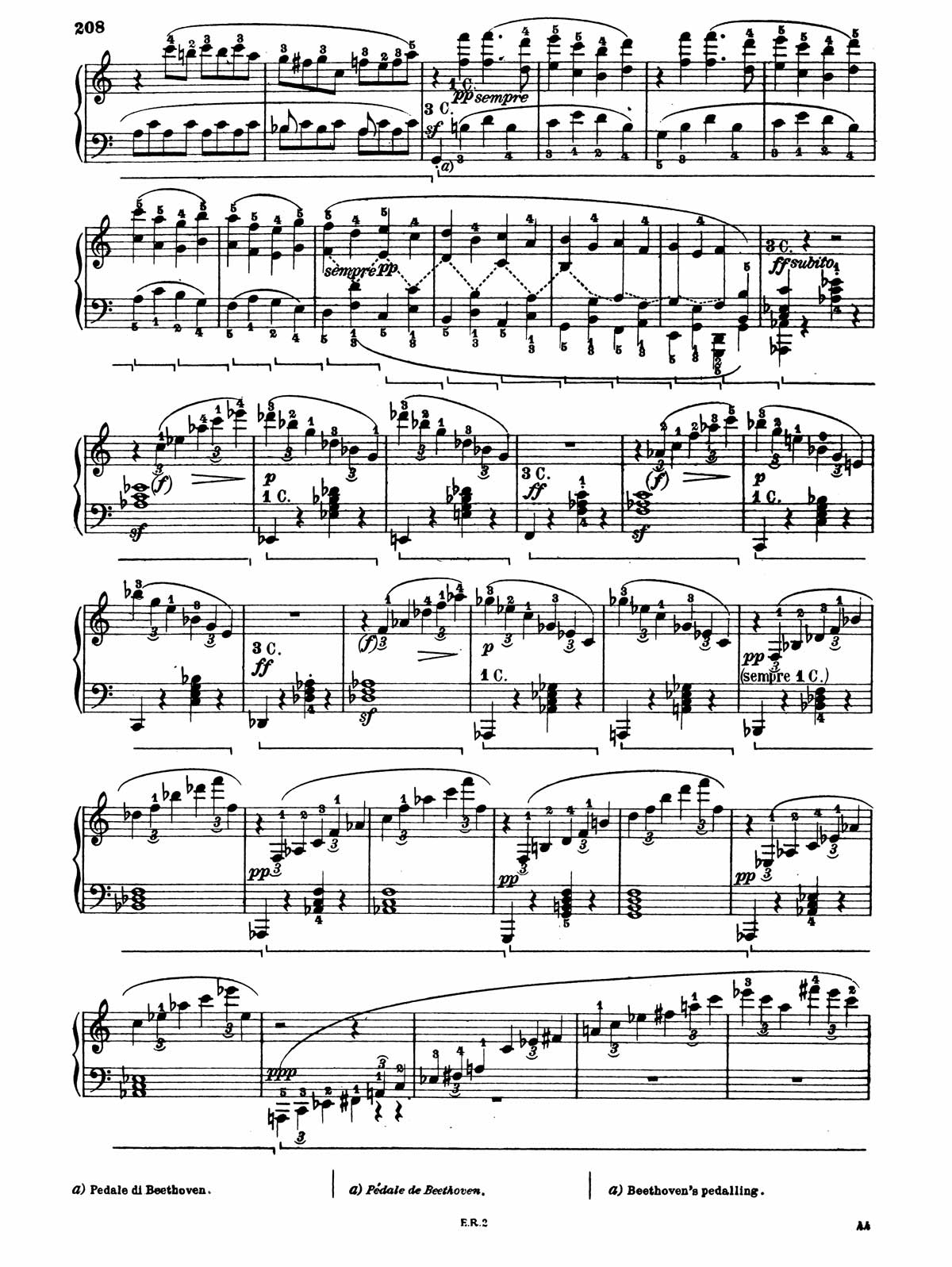
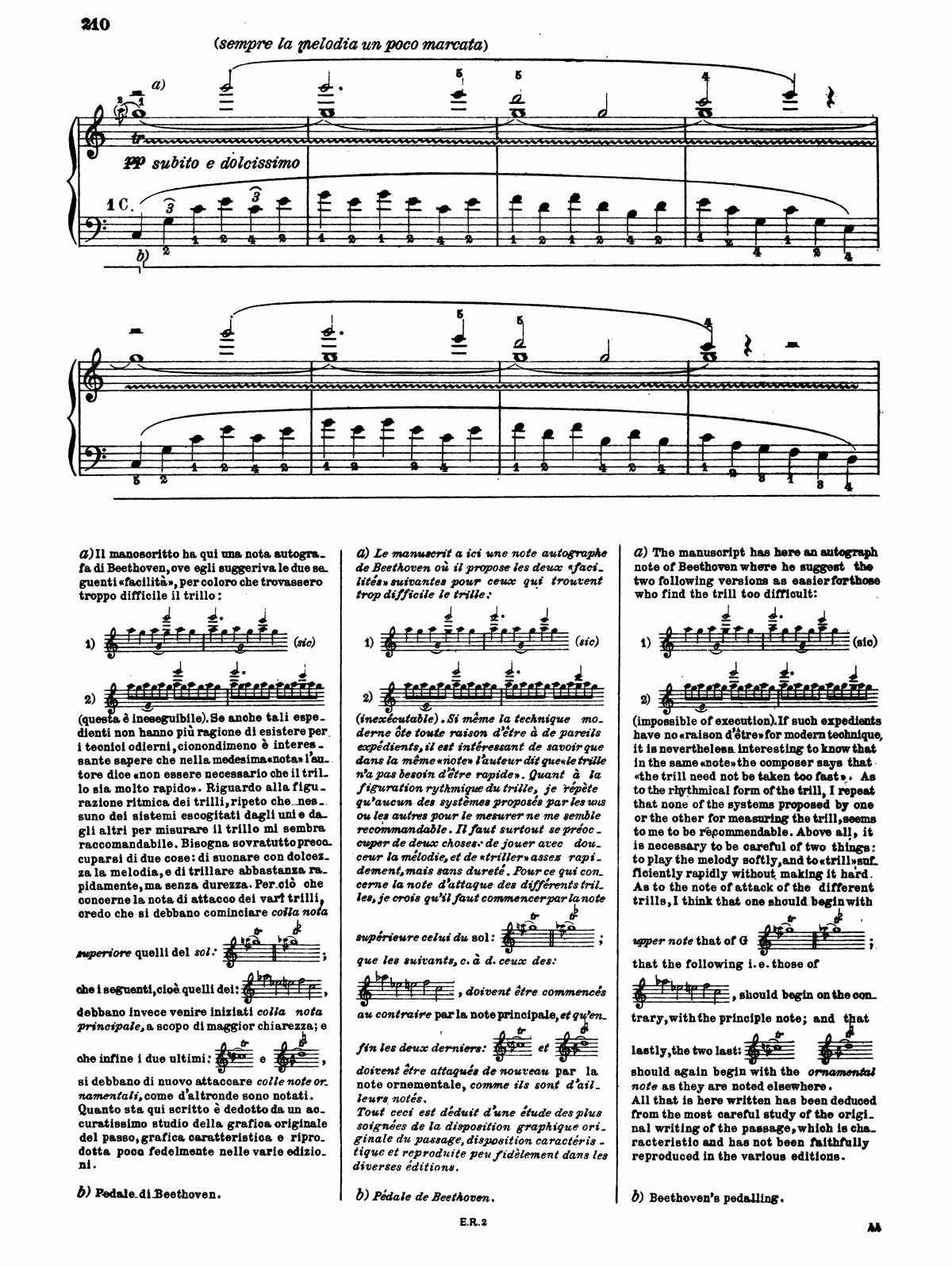
The lyrical opening theme is presented three times. The first entry takes place in a cross-hand presentation in bars 1-23, the second with right-hand octaves accompanied by left-hand arpeggios in bars 31-50, and the third with the right hand trilling. prolonged as the upper voice describes the melody, accompanied by the left hand with sixteenth note scales and scrawls, the combination creating an exciting climax. The first two statements are accompanied by long pedal prompts that mix tonic and dominant harmonies. Players playing them on today's pianos sometimes make adjustments, and many editions change the indications or offer alternatives.

Measures 63 to 113

The first section opens with a broken chord figured in C major. A second section in A minor outlines a new motif that opens in ascending staccato octaves in bars 71 to 98. A transitional passage introduces the opening phrase of the A theme, again with pedal indications that mix keys in measures 99 to 113.

Measures 114 to 175

The section A is repeated in its entirety.

Measures 176 to 220

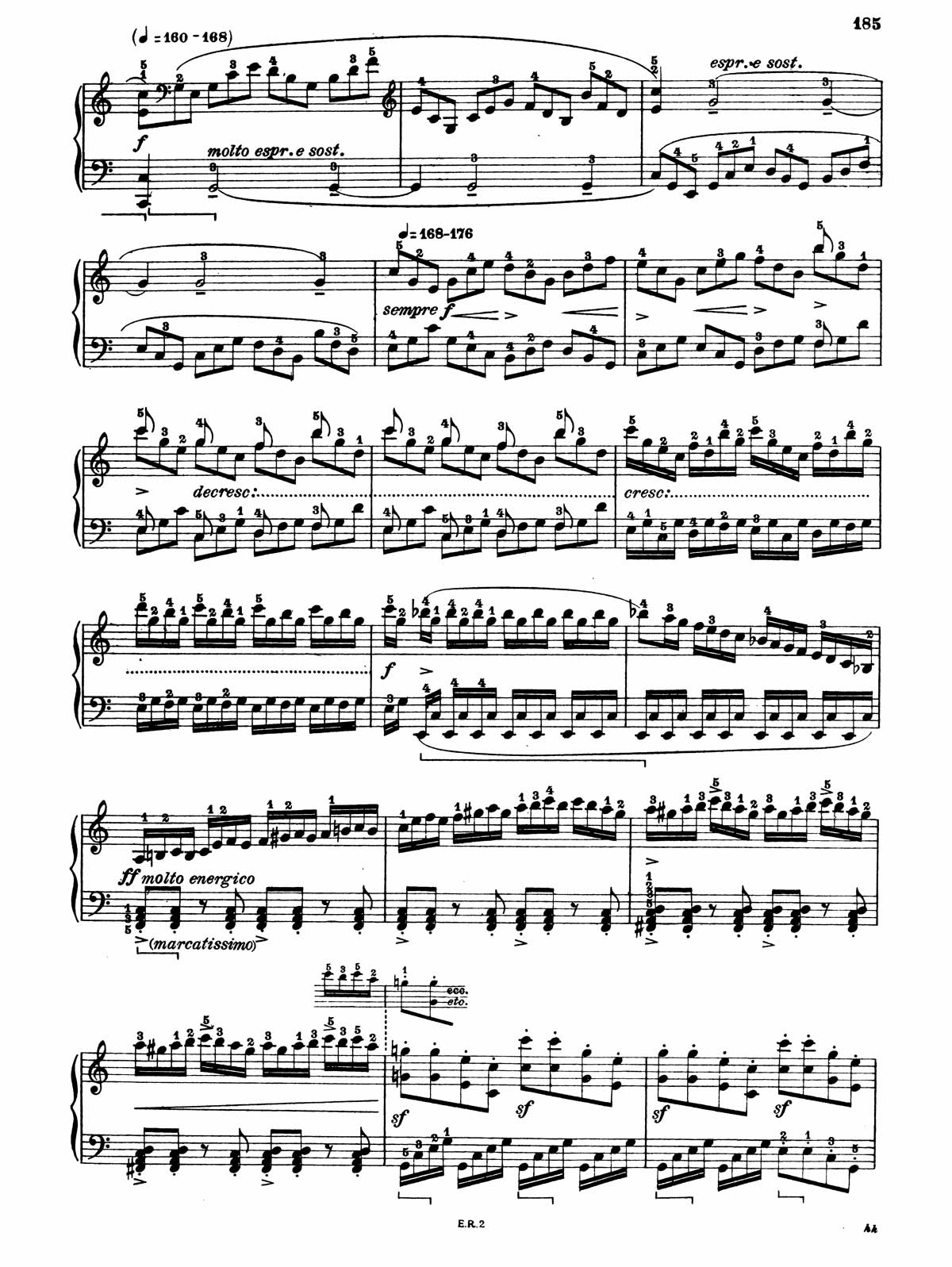
The C section first features a strong theme in octaves, opening in C minor and given alternately to each hand. Its second statement is accompanied by a dizzying and difficult triplet of sixteenth notes in bars 183 to 216. Its momentum is relieved by a series of single octaves in both hands on the note C, at such a pace that the difficulty of bringing this passage to a high level becomes painfully evident, bars 217 to 220.

Measures 221 to 312

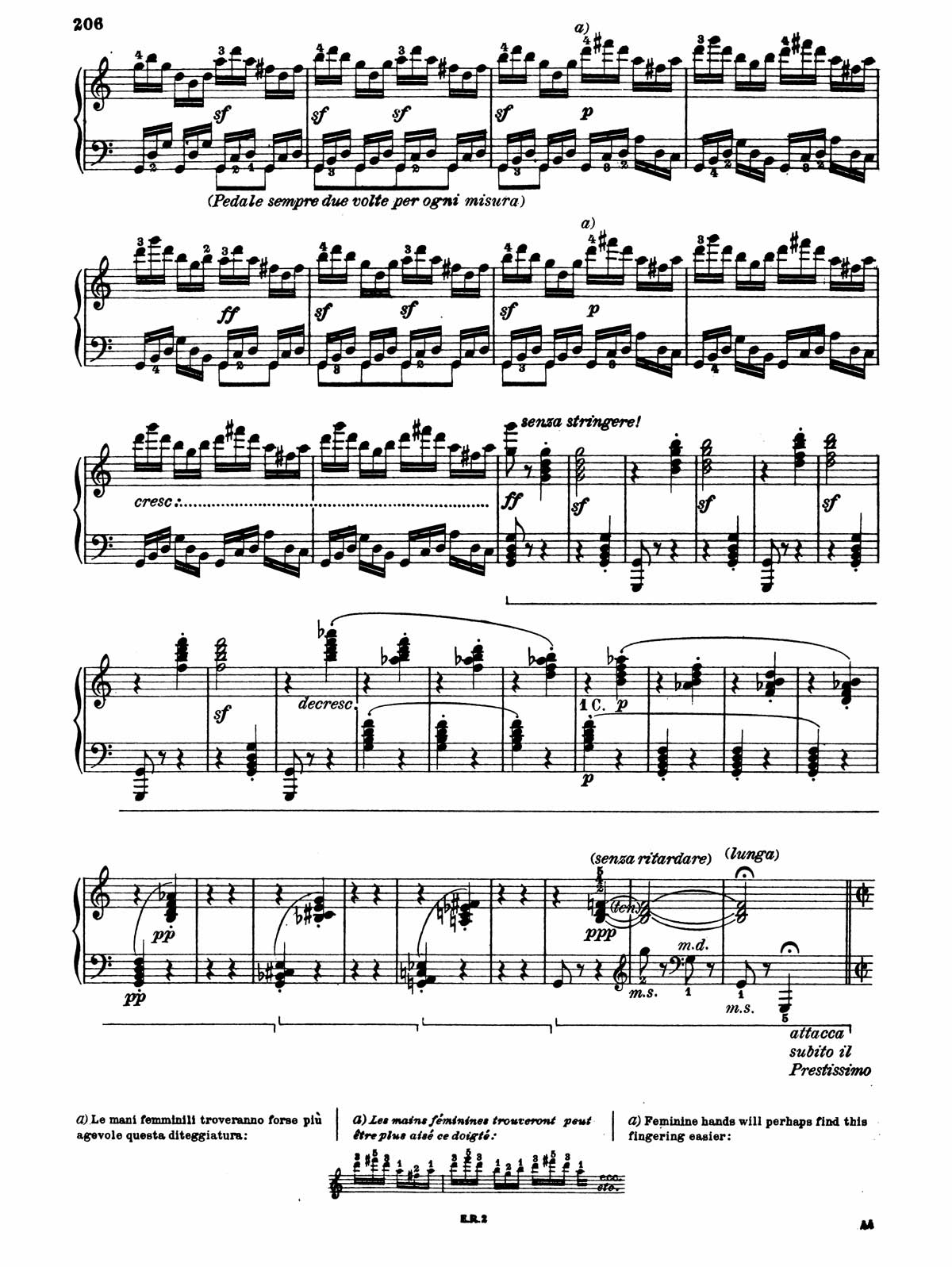
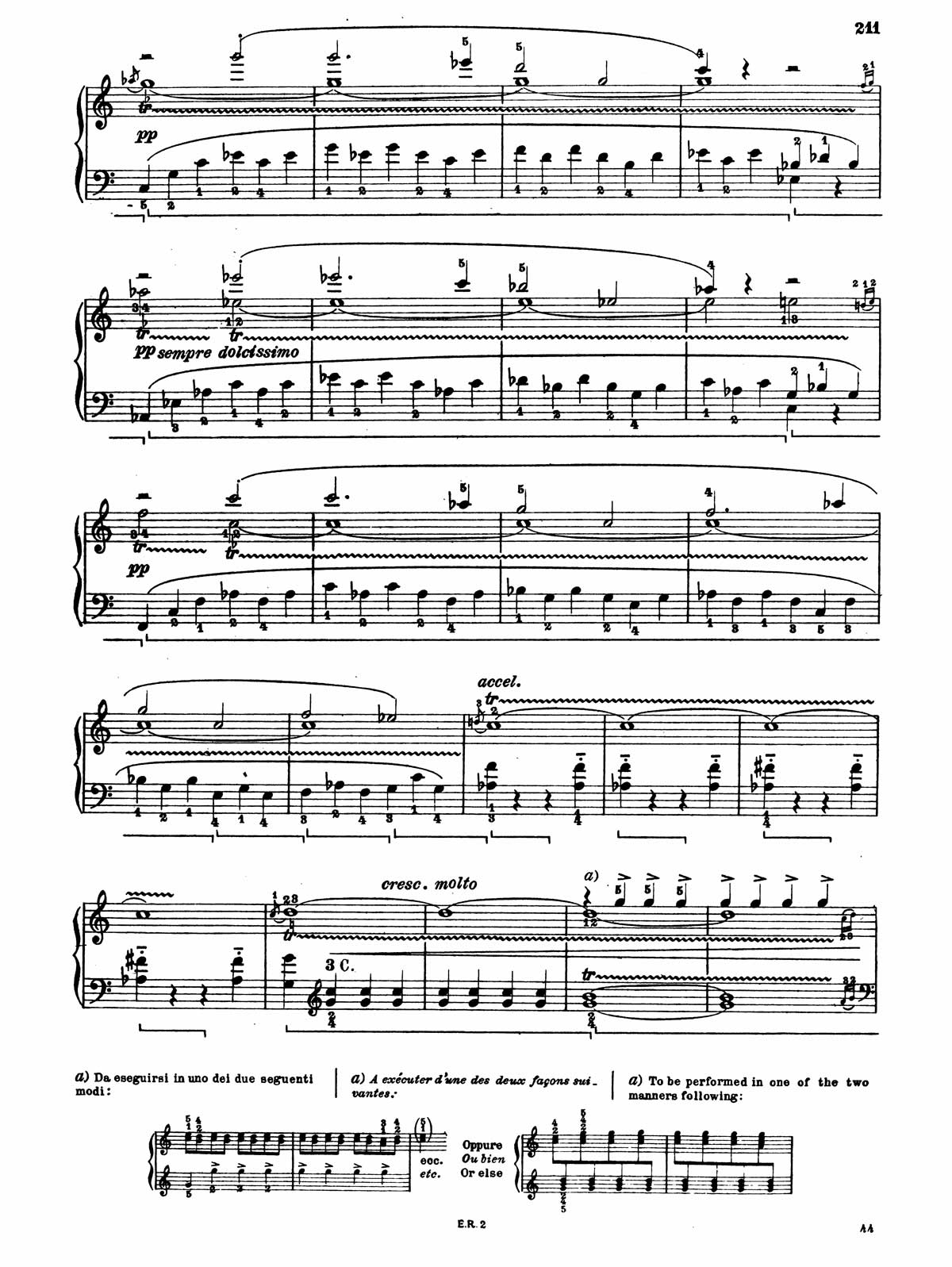
A development section follows, beginning with the entry of the opening phrase of the A theme in A♭ major, F minor, and D♭ major in bars 221 to 234. After a section of transition consisting of syncopated chords, the two da capo notes of the theme. A theme is laid out with arpeggios and passages, moving through C major, F major, B♭ major, E♭ minor, D♭ major, and C minor, finally resting on long dominant seventh/ninth harmonies in the major key of C. in measures 235 to 312.

Measures 313 to 344

The second and third statements of the main topic of section A are repeated.

Measures 345 to 402

The first section of the first entry restarts and expands both hands participating in the rapid broken chord, figurations that become increasingly frantic, often punctuated with sforzandi. A later section ends with solid dominant harmony chords rising to incorporate a minor ninth.

Measures 403 to 543

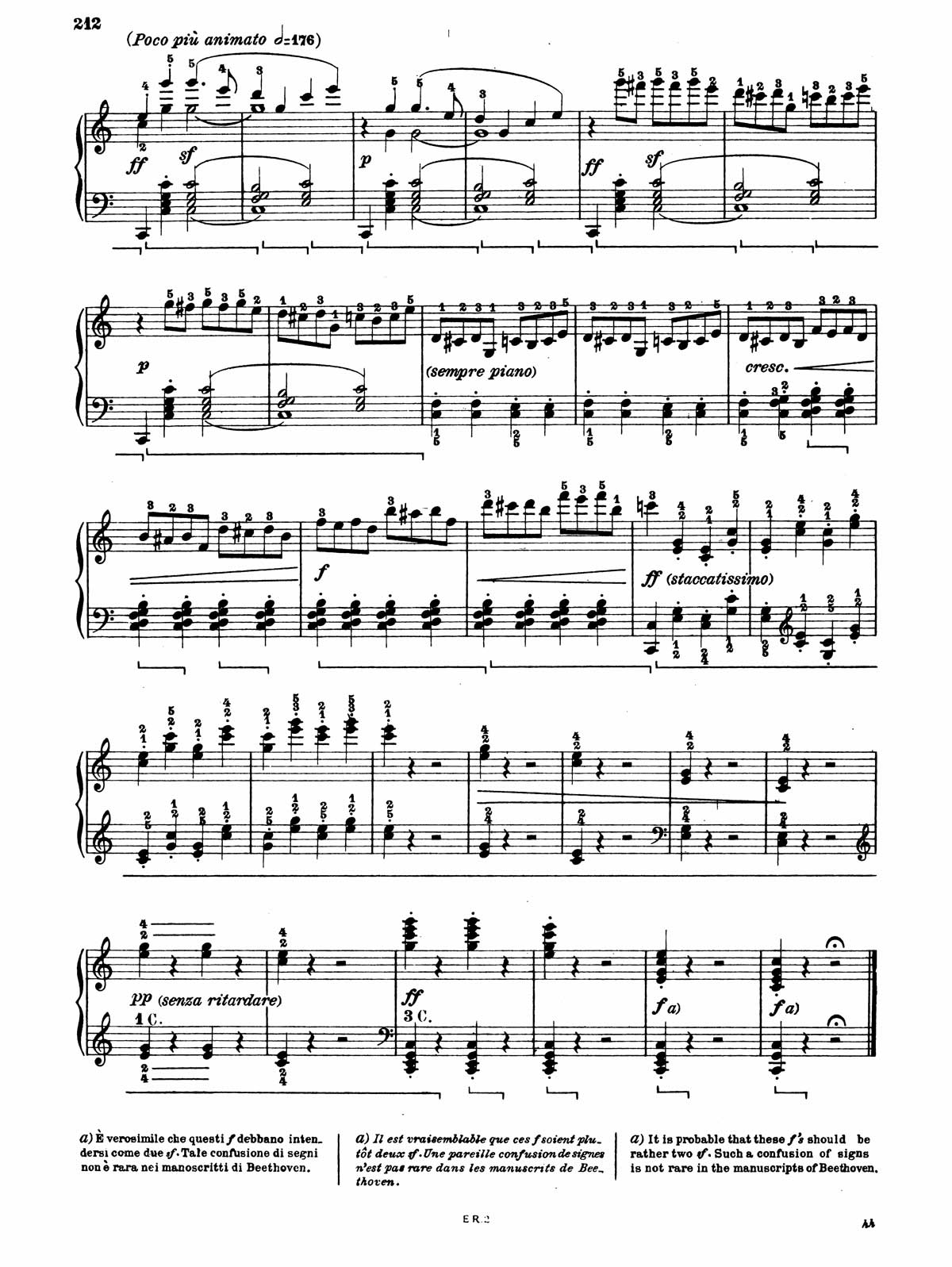
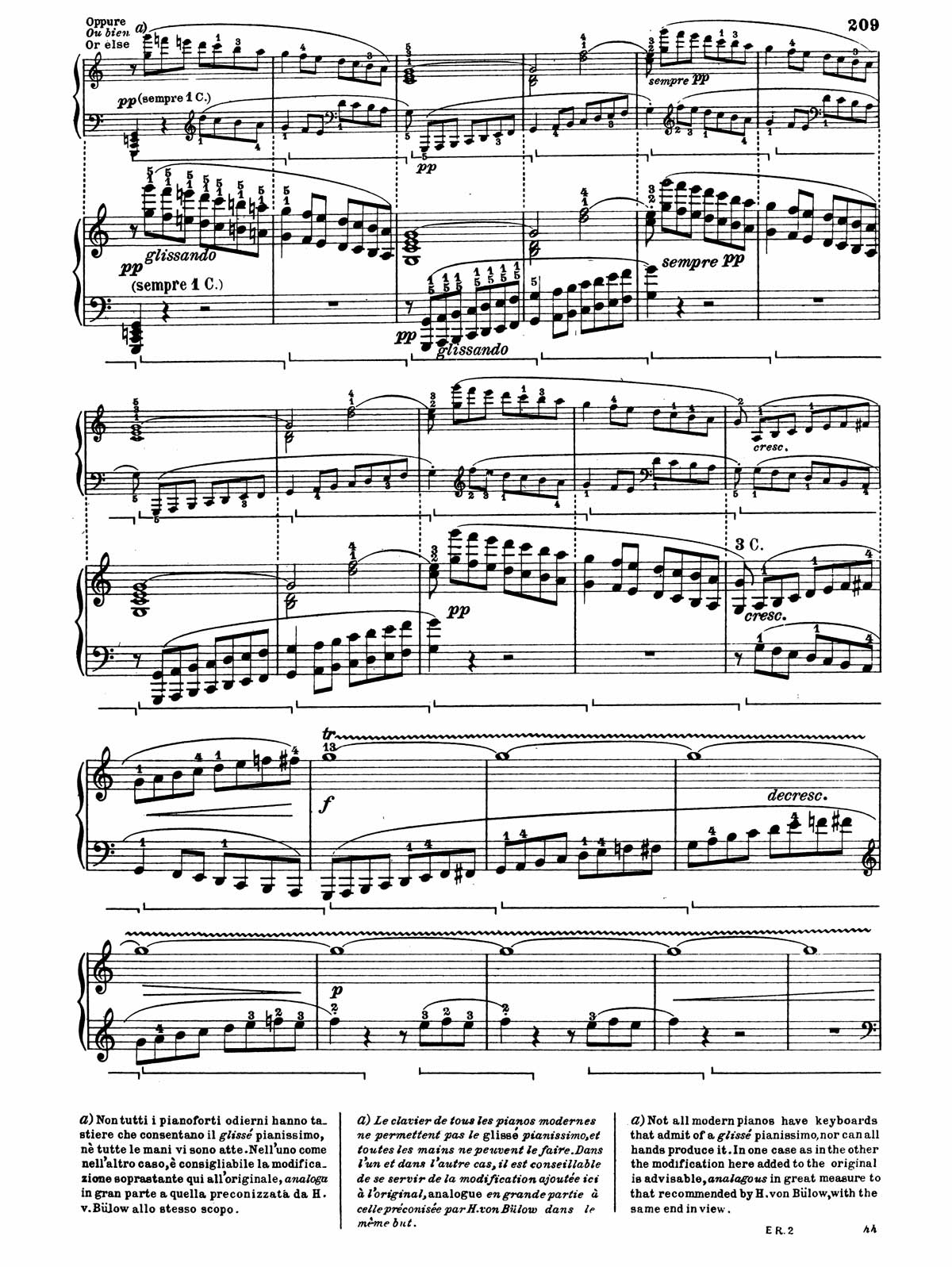
An extended coda marked prestissimo opens with statements of the A theme in C major, F major at bar 427, and G major at bar 431, expanding the phrase with passages in each case. Then a passage using the two-note opening of the theme motif moves through A♭ major, F minor, D♭ major, B♭ minor, F minor, and A♭ major, finally coming to rest on a six-part tonic. four outlined with fast octaves in bars 441 to 474. These are fingered 5-1, 5-1, 5-1 in the sources, and are thought to require glissandi octaves, which were easier to play over the action of the vintage pianos. Today's performers sometimes incorporate octave glissandi but also sometimes split octaves between hands in various ways when the piano action is too resistant. The final section of the coda places extended trills in the uppervoiced right hand outlining the A theme moving through C major, C minor, A♭ major and F minor, finally coming to rest at a half cadence incorporating triple trills in bars 477 to 514. Closing statements from the theme A opening phrase and the fast passage bring the movement to a brilliant finish in bars 515 to 545). The extended trills in this coda were performed by the composer in an example at the end of the autograph. Two versions have been offered: a harder one with the trill at 1/128 and an easier one with the trill at 1/64. Both examples start the trill in upper appoggiatura, a fact that has caused much speculation, since it is a relatively late date for the composer to do so.